MYTHOLOGY & PHILOSOPHY
Forty entries to think further
Twenty mythological and twenty philosophical records. Choose a story, explore an argument or compare two perspectives. The latest series is at the top.
Six reading routes through the files
Open a route and follow the chapters in the proposed order. At each step you can compare further with the related topics in the article.
Loss and return
Compare myth, healing heap and philosophical mortality.
Fire and responsibility
Read gifts and created beings besides the demand for their consequences.
City and conscience
From the human vote against to organizing a judgment.
Freedom in practice
Compare five different ways to practice desire and judgment.
- Diogenes: practicing freedom in the public square
- Epicurus: having enough, friendship and fear of death
- Epictetus: what is our fault and what a judgment does to us
- Odysseus and the Sirens: listen, knowledge and limit yourself
- Marcus Aurelius: an emperor who must continue to address himself
- Pyrrho and Sextus: continue to investigate without feigning any certainty
Beauty and explanation
Research story, beauty and the coherence of reality.
Cretan votes against
Read different perspectives on help, power and responsibility.
The new 20 dossiers
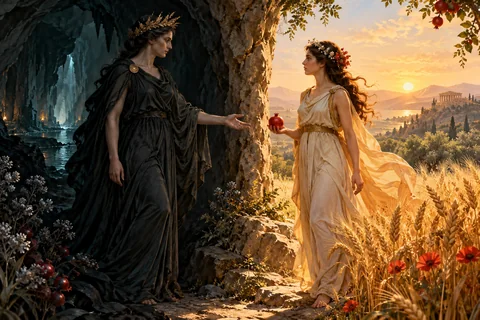 Demeter and Persephone: loss, return and price of fertilityA mother, a daughter and the power to stop the fertile world.
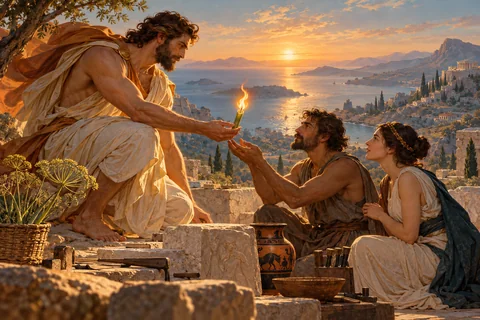 Prometheus: fire, technology and the responsibility of the makerFire as a gift, power demand and reason to think about the responsibility of creators.
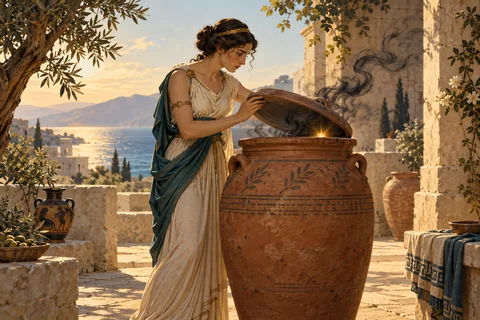 Pandora: the jug, the hope and the question of who is to blameWhy a storage jug and the ambiguity of hope tell more than the familiar box.
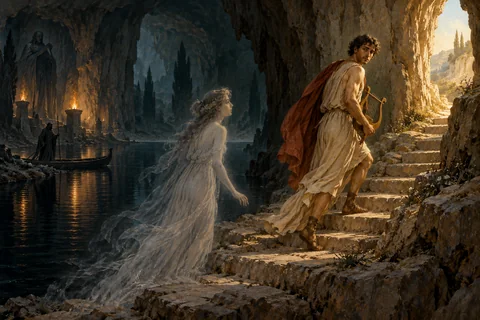 Orpheus and Eurydice: music, looking back and the limit of lossAn underworld tour of art, trust and the limit of memory can be reduced.
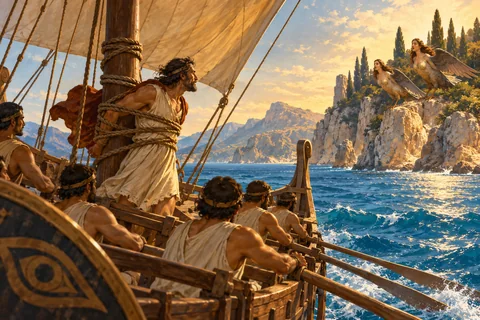 Odysseus and the Sirens: listen, knowledge and limit yourselfThe promise of knowledge, the attention of a hero and the crew who carries his plan.
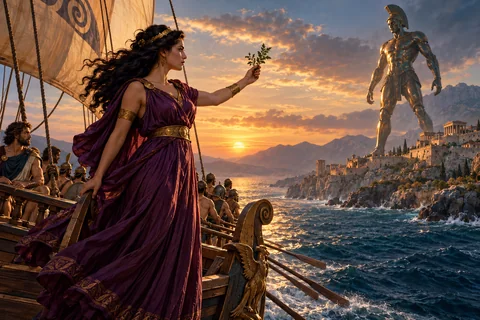 Medea and Jason: help, treason and the limits of understandingThe indispensable helper, the excluded woman, and the difference between understanding and righteous.
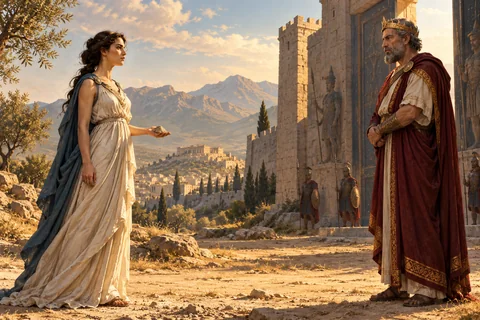 Antigone: conscience, burial and the border of commandFamily duty, unwritten rules and the danger of authority that can't listen anymore.
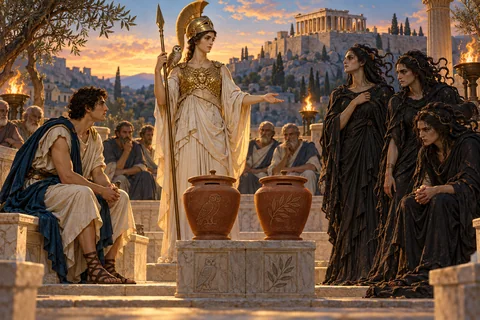 The Oresteia: from blood vengeance to imperfect judgmentA family conflict turns into a court of law, but anger and inequality do not disappear automatically.
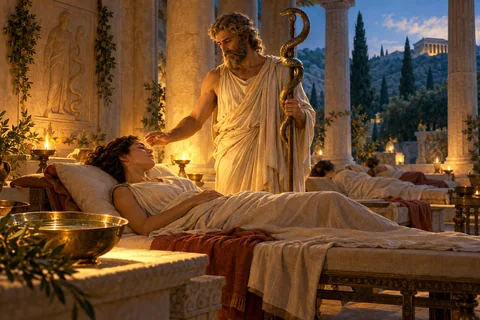 Asklepios: dreams, healing and reading a shrineA god of healing, a sacred landscape and the bronze criticism of dreams and dance scriptures.
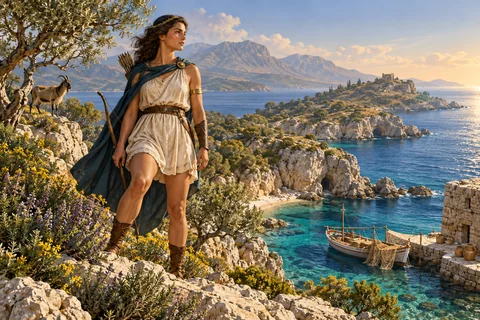 Britomartis and Diktynna: a Cretan goddess between net and landscapeCretan cult, Artemis and the various stories about a goddess and Minos.
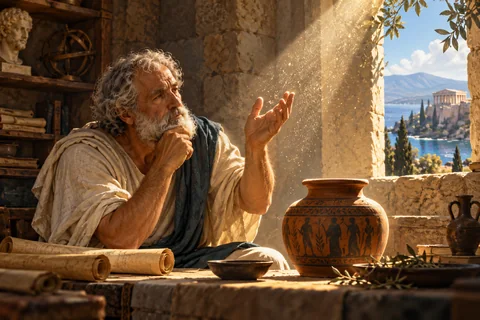 Democritus: atoms, emptiness and the reliability of our sensesA philosophical explanation of change and the problem of knowledge through the senses.
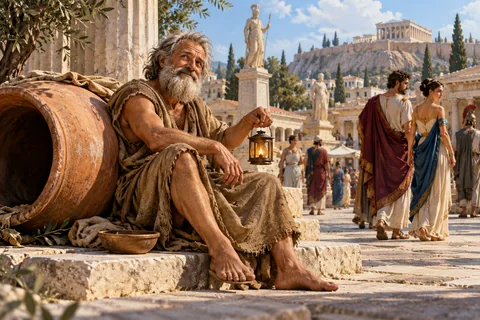 Diogenes: practicing freedom in the public squarePossession, shame and boldness explored by a pronounced way of life.
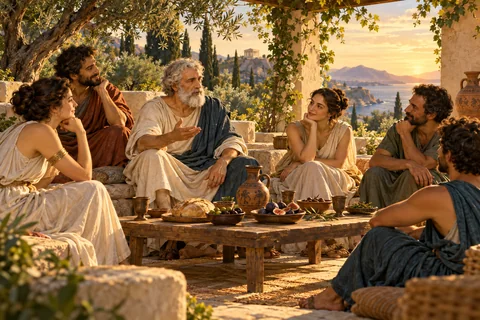 Epicurus: having enough, friendship and fear of deathThe distinction between desires, the value of friends and the argument against fear of death.
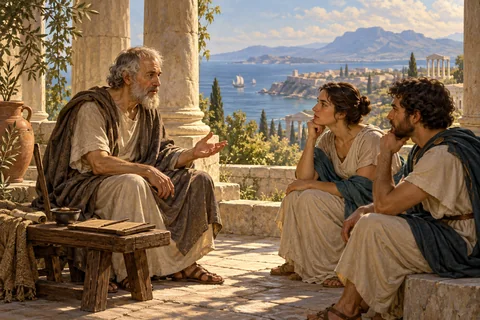 Epictetus: what is our fault and what a judgment does to usProhairesis, the use of impressions and the limits affect an outcome.
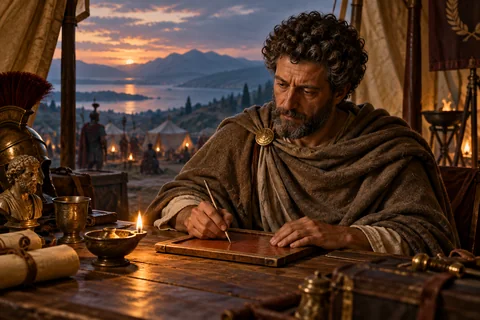 Marcus Aurelius: an emperor who must continue to address himselfA Roman emperor writes Greek memories of the task before him.
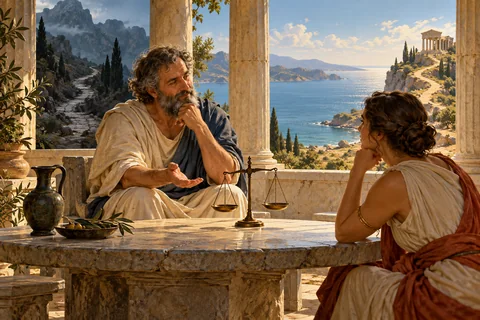 Pyrrho and Sextus: continue to investigate without feigning any certaintyResearch, epochē and the question of how to act without fake certainty.
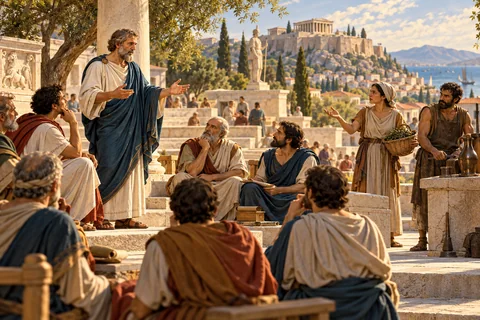 Aristotle & Politica: who can decide about the good life?Who is a citizen, who bears the burden and who can determine the common benefit?
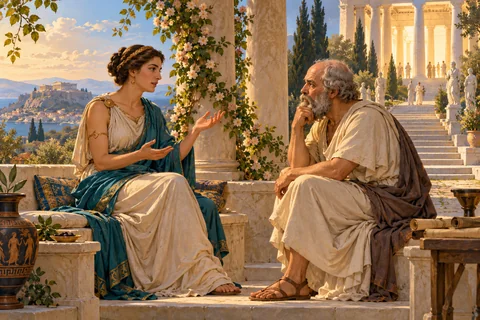 Plato & Symposium: Eros, Missing and Learning to See BeautyDiotima, the ascent to beauty and the question of what happens to the special loved one.
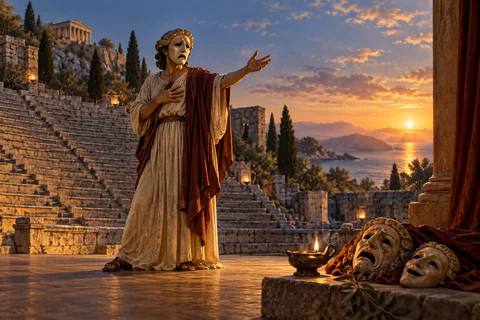 Aristotle's Poetics: Why a imaginary tragedy really hits usMimesis, action, recognition and the controversial meaning of catharsis.
 Plotinus: the One, the soul and the experience of cohesionA late-night philosophy of unity, multitude and learning to see beauty differently.
The first 20 files
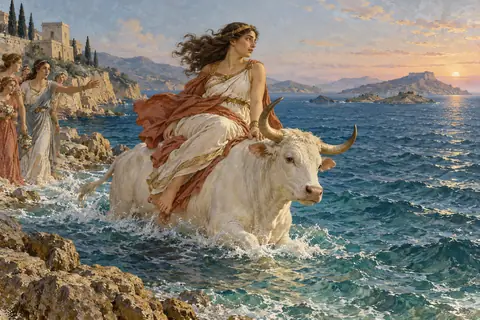 Europe: a princess between worldsA Phoenician princess, a god in bull form and the changing meaning of a name.
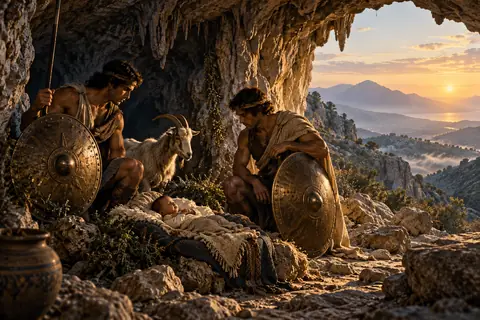 Zeus in Crete: cave, birth and cultThe Ida cave, the Thickness cave and the question of how a myth attaches to a place.
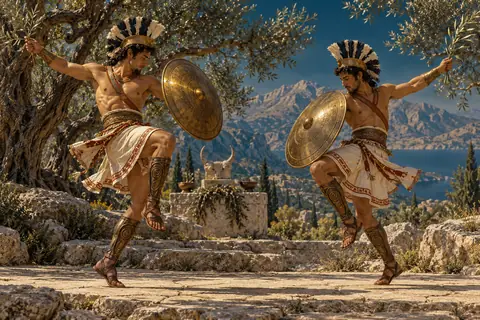 De Koureten: dance, shield and protectionWhy rhythm in the myth gets a protective force.
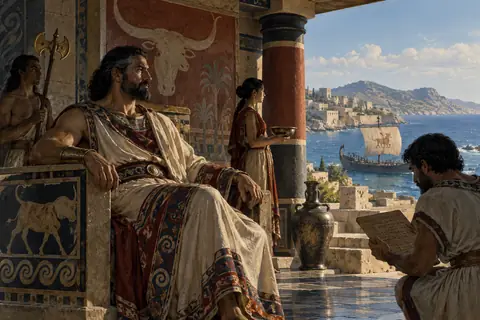 Minos: king, legislator and judgeHow one figure changed from ruler of Crete to judge of the dead.
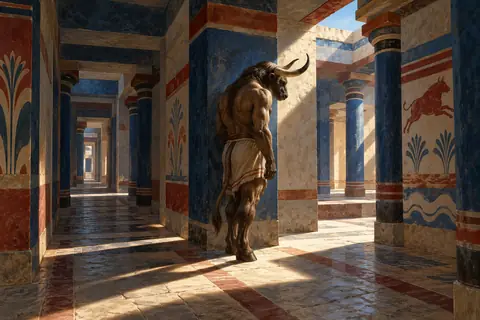 Labyrinth and Minotauros: myth, palace and powerFrom a monster in a maze to questions about power, memory and archaeology.
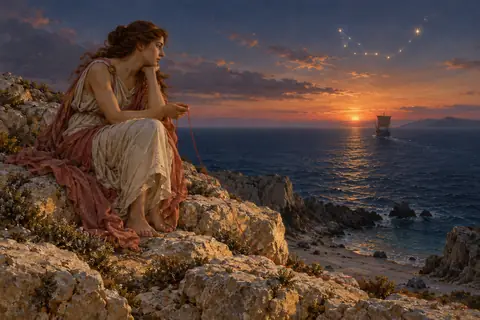 Ariadne: thread, choice and different endingsWhy the woman pointing the way out is left behind herself.
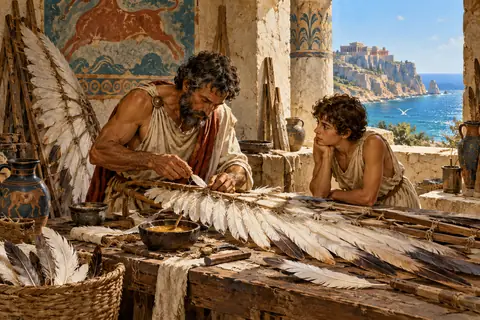 Daidalos and Ikaros: craftsmanship and boundariesA story about technique, transfer and the price of a warning.
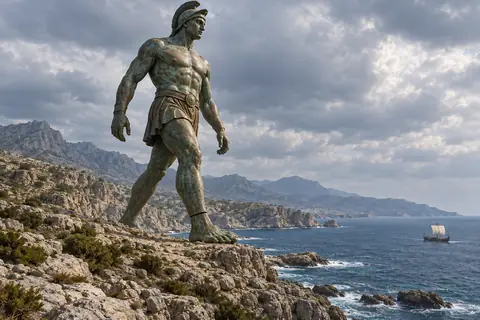 Talos: the bronze guard of CreteA mythical vending machine between divine gift, defense work and fragile body.
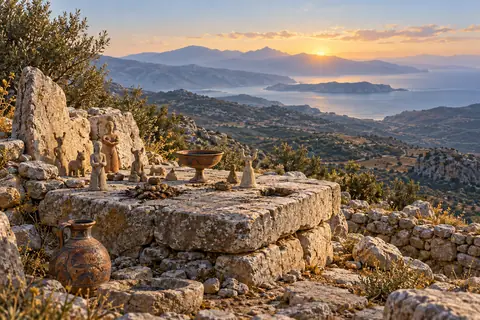 Minoan sanctuaries: what do we really know?Cave, mountain top, palace and writing: Reconstructing religion without filling the silence of Linear A.
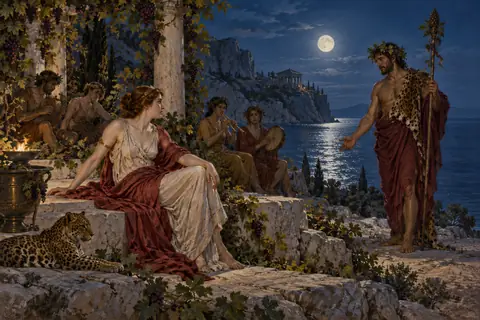 Dionysos and Ariadne: a commitment to the seaA god, an abandoned princess and the changing language of ecstasy and rebirth.
 The Milesians: what does the world carry?Thales, Anaximander and Anaximanes seek explanations in nature itself.
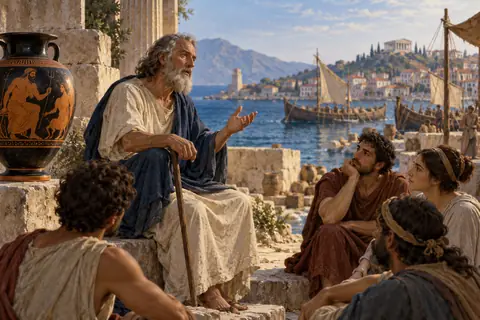 Xenophanes: Who makes the gods in his image?An early criticism of human projection and an investigation into the limits of knowledge.
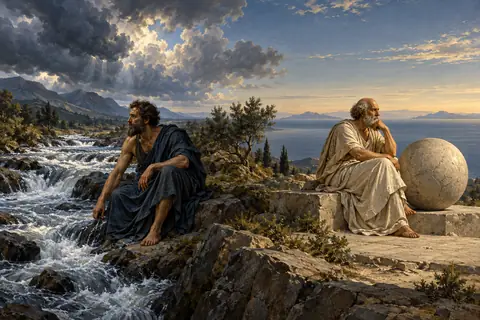 Heraclitus and Parmenides:An influential contrast that only works when we release the slogans.
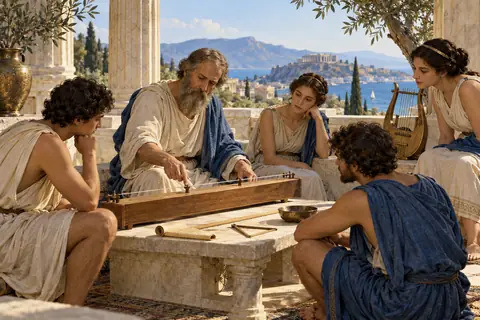 Pythagoras: mathematics, harmony and the search for orderA name, a school and a tradition that often tells more about later than about the master himself.
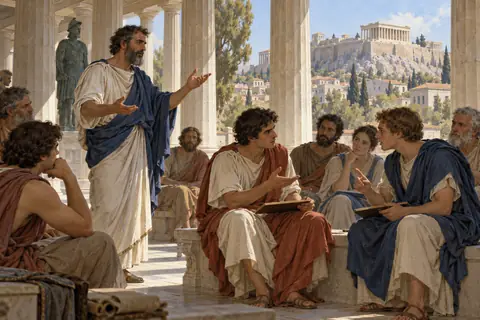 The Sofists: Language, Education and PowerWhy rhetoric can be both a democratic skill and a risk.
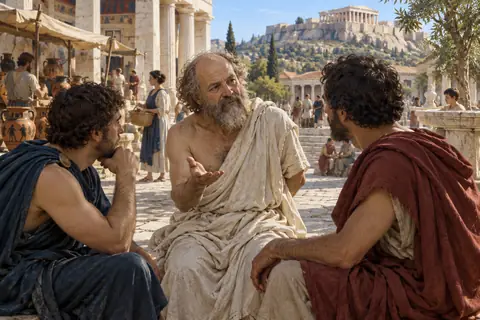 Socrates: the question and life under studyNot written leather, but a method that tests beliefs for their reasons.
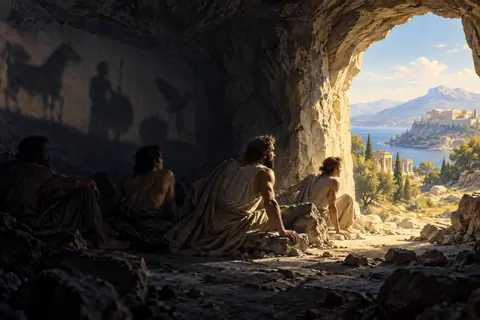 Platove cave: knowledge as a reversalAn image of education, truth and the responsibility to return.
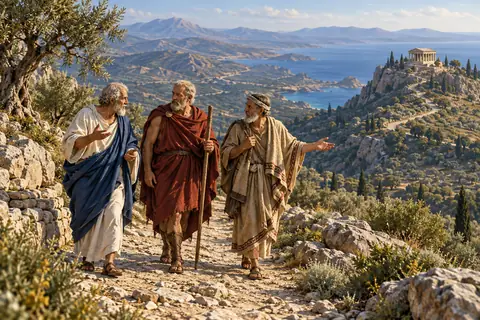 Platoubic Laws: Crete as an interlocutorA political dialogue in Crete and not a direct description of Minoan society.
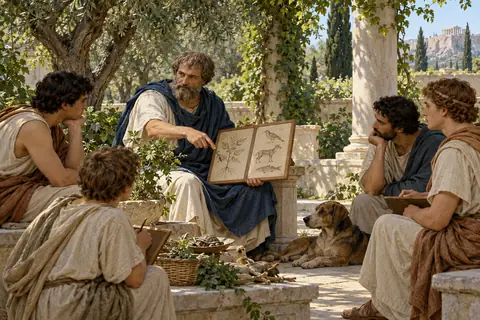 Aristotle: virtue in daily actionEudaimonia, character and practical wisdom as a lived philosophy.
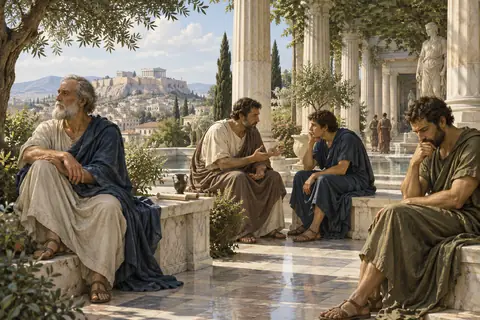 Hellenistic philosophy: three ways to liveStoics, Epicurists and skeptics seek peace, freedom and insight along different paths.