KRETA · MYTHOLOGY · DIFFERENCE
Zeus in Crete: cave, birth and cult
The Ida cave, the Thickness cave and the question of how a myth attaches to a place.
Crete has two famous caves connected to the youth of Zeus: the cave on the Ida and the Thickness cave. Their stories and archaeological history do not coincide seamlessly. That is the difference that makes this dossier interesting.
Two places, no simple choice
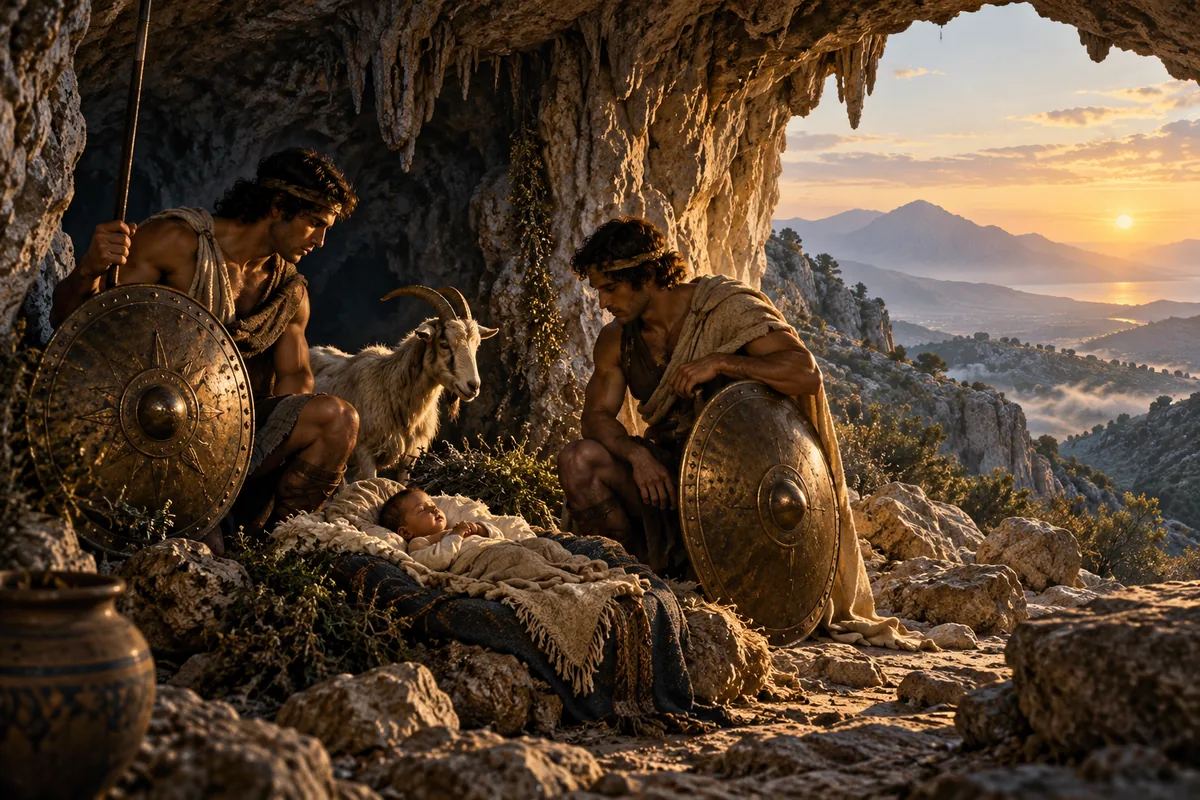
In mythical genealogy, Rhea hides her newborn son Zeus from Kronos, who swallows his children. Cretan traditions place birth or upbringing in a cave, but do not always mention the same cave. The Ida cave lies high on the Psiloritis; the Dikte-cave is located in eastern Crete. Ancient authors, local cults and later visitors could connect different places to the same god.
For the Ida cave, a long religious history of use has been investigated archaeologically. The finds include pottery, weapons, jewelry and bronze objects. The Heraklion Archaeological Museum describes the famous bronze tympanon and votive gifts. This shows ritual use and changing cult practices; it does not automatically make every detail of the Zeus story historical.
From landscape to shrine
A cave is simultaneously sheltered space and passage to a hidden inner world. In the mountains a cave could become a destination where visitors left sacrifices and physical effort became part of the meeting with the saint. The height, darkness and echo were no backdrop behind a story: they formed the experience of the place.
The finds from the Ida cave cover several periods. So the sanctuary changed along with the communities that visited it. The cult of Zeus in the Iron Age cannot simply be equated with religion on Minoan Crete. Archaeologists compare layers, objects and inscriptions; they should be careful to merge centuries into one continuous tradition.
What archaeology can say
Bronze shields and other votive gifts confirm that the cave was a meaningful sanctuary. They can say something about rituals, craft networks and the value that visitors gave to the sacrifice. An object can also combine several influences: local design, contacts with the eastern Mediterranean and later interpretations.
Archaeology can usually not determine whether a mythical event occurred exactly at that place. She does help to understand why a community experienced a place as sacred and how that meaning changed over time. Therefore, the right question is not only "Was Zeus born here?" but also "When and by whom was this cave seen as Zeus' place?
View question
Compare the two caves on a map and then read the ancient stories. What role does height, water, accessibility and regional identity play in choosing a holy place?
Sources and read on
- Hesiodus, Theogony 453–506; Callimachus, Hymne to Zeus.
- Heraklion Archaeological Museum,.
- All of Greece on Culture, Idaean Cave, Anogeia, Psiloritis.