GREEK MUSIC · THE OVERVIEW
Thirty entrances to listen better
Twenty new files match the ten existing musical stories. Follow an instrument, a dance or a voice. The listening questions help to hear your differences; the sources bring you to documented performances and backgrounds.
Six listening routes
Begin small, compare two versions or follow a maker. Each route opens directly the corresponding files.
A small instrument workshop
Follow sound, stroke, bow and air.
Words that carry a melody
Compare verse, recurring motif, changing vocals and liturgy.
From shared step to own space
Read the quiet tuning next to driving and solo dances.
Port, melodic road and urban song
A route along archive, instrument and musical order.
Poet, composer and performer
Four portraits with attention to the different contributions.
From Cretan table to bigger stage
Compare execution, editing and television reminder.
Twenty new in-depth dossiers
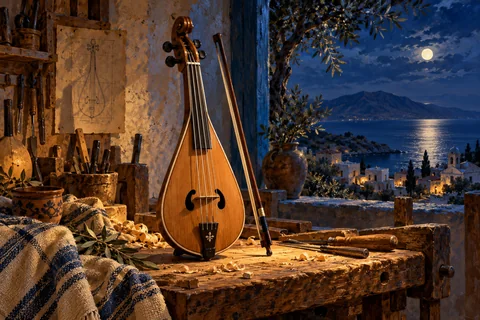 The Cretan lyra: a voice between bow and nailHow bow, nail and phrasing form a recognizable voice.
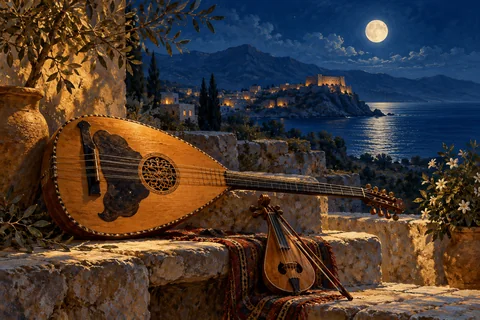 De laouto: accompaniment that gives the music directionHear how attacks, low tones and answers give an ensemble direction.
 The askomandoura: breathe that lives in an air bagAnother sound of Crete: listening to continuity and movement.
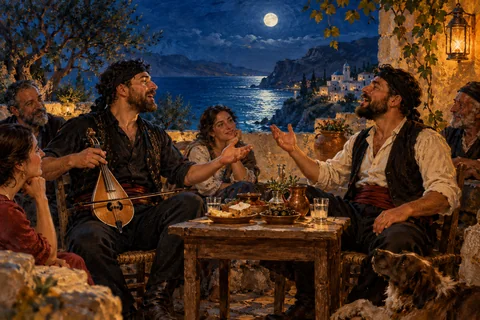 Mantinades: two rules that change a companyRunning verses such as poetry, recitation and social exchange.
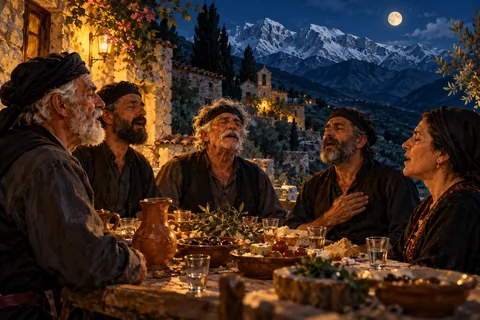 Rizitika: singing together at the foot of the White MountainsUnaccompanied vocals, table and way: follow the voice that bets and the group that responds.
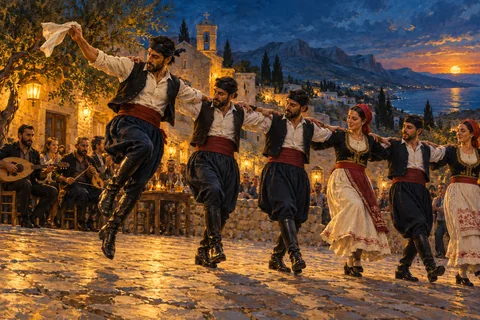 Pentozali: energy, precision and space for the danceBeyond the jump: a two-part musical pulse and the collaboration in line.
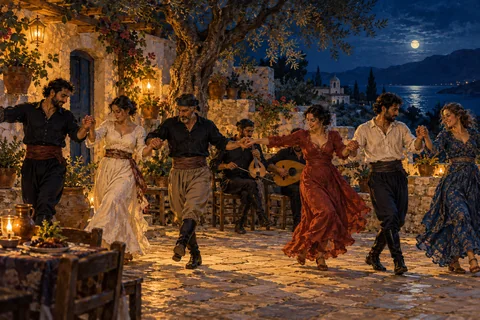 The Cretan syrtos: melody that holds a circleA documented example from Chania as an entrance to phrase and connected movement.
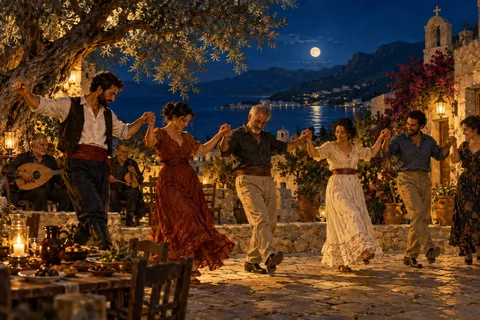 Siganos: Coherence in the slow movementThe little tuning that holds a quiet dance together.
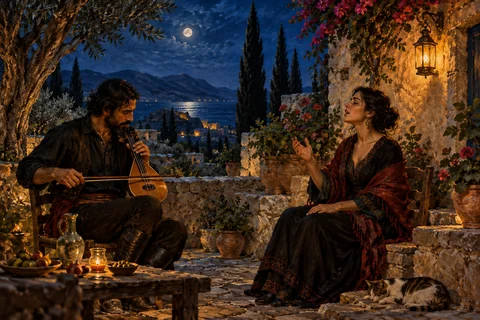 Assylies: melodic space for a new verseRecurrent motives and new words in a recording from eastern Crete.
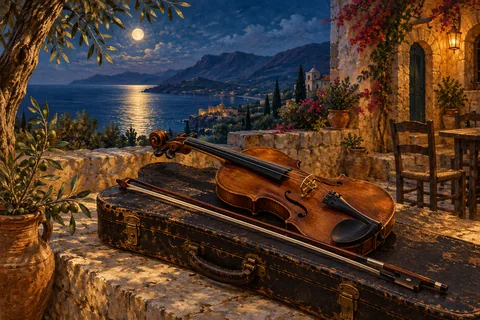 The violin on Crete: listen beyond the most famous island statueThe violin as part of a versatile island sound, with an entrance via Sitia.
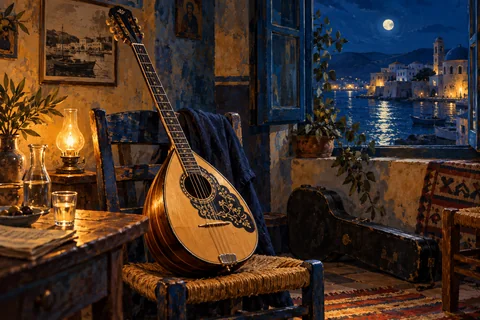 The bouzouki: attack, string choirs and a changing roleFrom the first attack to a free introduction: learn to listen to the party.
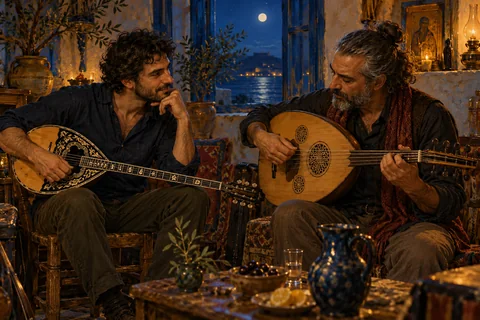 Dromoi: melodic roads that you can learn to followMore than a scale: follow direction, emphasis and rounding in a melody.
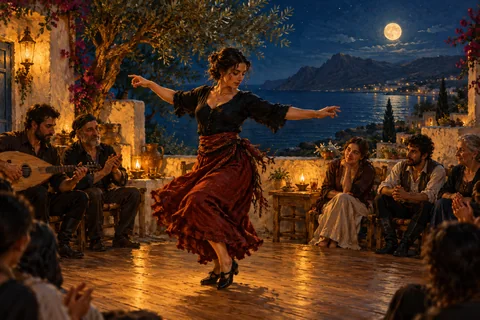 Zeibekiko: the space around one dancerA solo dancer, a musical cycle and the company that makes room.
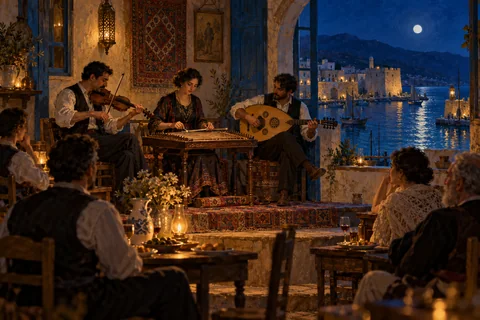 Smyrneïka: listening to a musical world around a portAn archive route along performers, instruments and musical memory of Asia Minor.
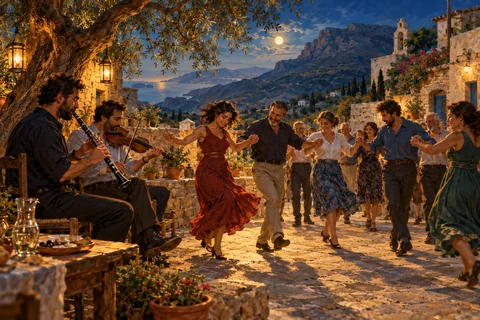 Dimotiko tragoudi: a landscape of local voicesA listening card of local repertoires and the events they sound like.
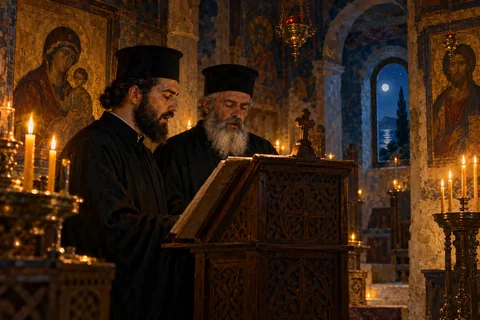 Byzantine vocals: melody in service of the wordListen to vocal liturgy from text, phrase, transfer and space.
 Manos Hadjidakis: the song as a space for imaginationFrom song and theatre to The Gioconda's Smile and O Megalos Erotikos.
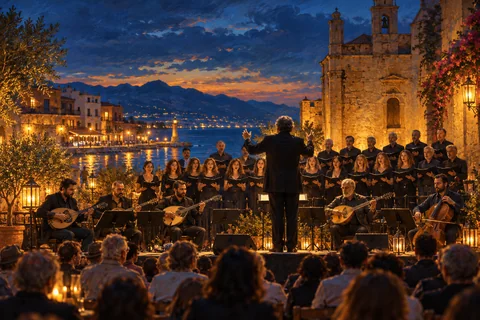 Mikis Theodorakis: poetry teaching an audience to singEpitafios and Axion Esti as inputs to text, larger form and shared listening.
 Nikos Xylouris: a Cretan voice in a bigger storyA recognizable voice in traditional repertoire, new compositions and public memory.
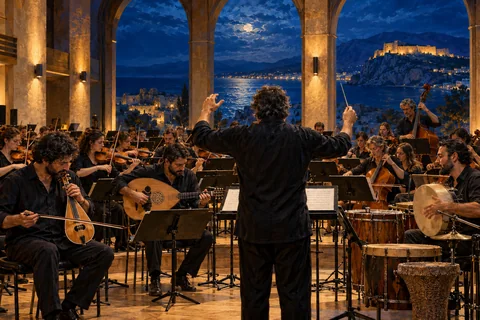 Yannis Markopoulos: Cretan sounds in a new compositionChroniko, Rizitika and Ithageenia: how different musical means work together.
The existing musical stories
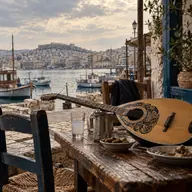 Rebetiko: a city gets a voteFrom harbour neighbourhoods and migration to recording studio and cultural heritage, a musical history in which Greece remains connected to the world around it.
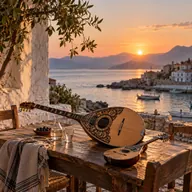 The language of the musicInstruments, rhythms, melodic ways and the art of recitation. A listening tool for anyone who wants to go beyond .This sounds Greek .
 Crete: music as a meetingLyra, laouto, mantinades, and being together around a performance, with a practical listening route and a list of concepts for the road.
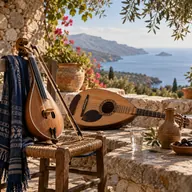 Crete· String, string & voice . . . Listen to the role of lyra, laouto, mantinades and dance. Six listening assignments connect music to the island.
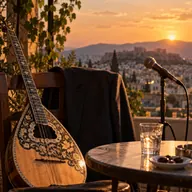 Dimitris MitropanosA laïkó voice in which personal emotion and a wider audience meet, with special attention to Roza and the role of composer, lyricist and interpreter.
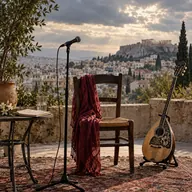 Katerina KoukaΚατερίνα Κούκα: a voice between laïkó, theater and the personal story. A portrait based on her own interviews, with Den yparchoun angeloi as a listening entrance.
 Despina Vandi: Ela & To NisiTwo songs are consciously given space here: a call to get closer and an island that will feel differently due to lack of information. With credits, context and targeted listening questions.
 Demis Roussos: a voice across bordersFrom the psychedelic pop of Aphrodite .. Child to Forever and Ever. A portrait of a singer who connected with his voice lands, languages and generations.
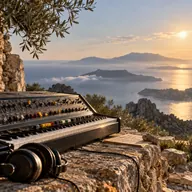 Vangelis: sound, space & imaginationFrom the Aphrodite family of Child and Nemo Studios to Spiral, Antarctica, Blade Runner and the cosmos. An in-depth portrait with album studies, listening questions and three routes through his music.
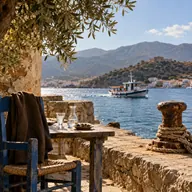 Who Pays the Ferryman? Sound and memory in CreteA title melodie that evokes a landscape. About the 1977 BBC series, the music of Yannis Markopoulos and the return of a past that is not over.