GREEK MUSIC · DIVISION 5 / 20
Rizitika: singing together at the foot of the White Mountains
Unaccompanied vocals, table and way: follow the voice that bets and the group that responds.
Rizitika ask for a different listening attitude than virtuoso dance music. One vote puts something in, others take it over and the time is formed by the recitation. The joint sound makes it audible how a song is worn by people.
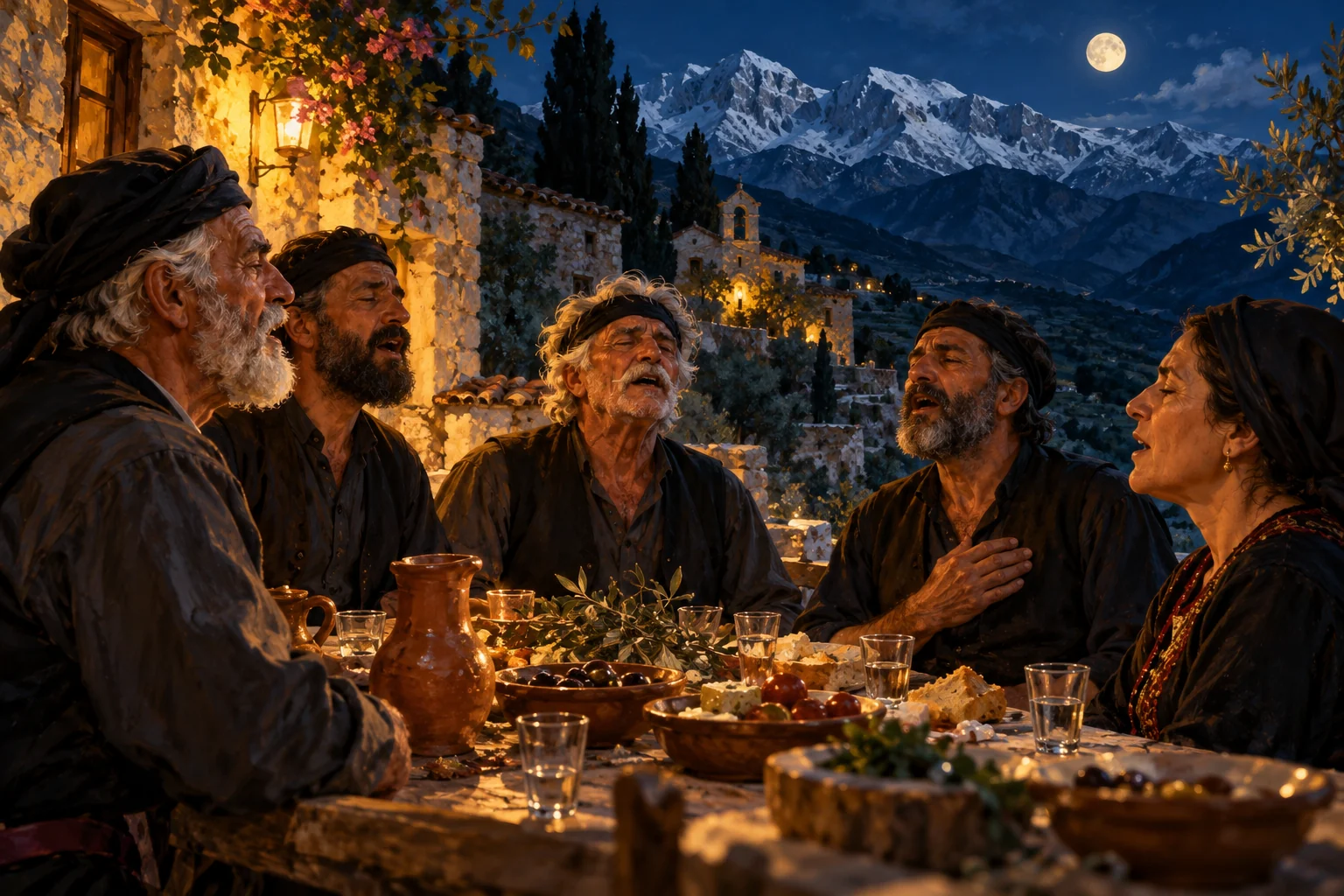
A region and a singing practice
The university Amargianakis archive connects rizitika with the foothills of the White Mountains and with the wider area of Chania and Rethymno. It describes the past practice as usually unguided and often in changing vocals. Those are concrete leads to listen to. They do not make every recording identical and do not exclude later arrangements. The word refers to a repertoire and execution practice with different occasions and versions. So start with the fragment described, instead of raising a single modern concert recording to the full standard for the genre.
One voice begins, a group reacts
In changing vocals, the relationship between effort and response has a clear formative role. Try to hear which part is put down by a lead singer and which part is repeated or continued by others. A group can sing one melodic line together. Multiple voices do not automatically mean multiple independent moving musical parts. That distinction helps to avoid unnecessary labels. Prefer to listen to the actual division: who starts, when do others join, and what does the joint sound do with the meaning or weight of the preceding rule?
Table and road
The documentation distinguishes songs from the table, tis tavlas, and from the road, tis stratas. Such indications give access to use and environment. Ask what a sitting company expects from a lecture and what can be practical or meaningful along the way. Not just fill the missing context with romantic images of mountains and heroes. The title of a song, the listed opportunity and the way of bet often give more concrete information. Also within a tradition, the same material can be given a different emphasis or social function in a new situation.
Breathe draws the joint time
Without clear instrumental guidance, it becomes tempting to put a constant even count under everything. Put off that propensity for a while. First follow the length of the singing and the place where the group rebootes. Where does the text seem to ask for space? Where is a vowel held? Don't make that listening experiment a general technical definition of all rizitika. It's a way to find out which signals in your recording carry the progress. A regular pulse may be present, but it deserves to be heard instead of supposedly beforehand.
A song keeps changing surroundings
A table registration, a choir concert and an edited record can show related repertoire with different results. Compare not only the melody but also the distance between voices, the length of silences and the reaction of the environment. Added instruments change the listening experience. You can describe that without judging directly about better, worse or pure. An archive source saves a certain execution and an arrangement makes different choices. The question of what information both provide is more fruitful than the expectation that one version will have to replace all others for good.
Listen further: a sentence in two forms
Use a documented rizitiko from the university archive and, if possible, find a second performance of the same song. Follow one line in both versions. Is he detained for the same time, carried by the same number of people and broken down in the same place? Then write down what you, as a listener, experience differently. Read the text and check if the documentation mentions an occasion. You then have three layers next to each other: the words, their concrete presentation and your response. Just by distinguishing those layers the joint vocals can get more depth.
Sources & Listen inputs
- University of Crete Rizitika songs
Scientific Archive Explanatory notes on swap songs, region and the distinction between table songs and road songs.
- University of Crete a rizitiko with Kostas Mountakis
Concrete archive registration, 3 June 1986; studio of the University of Crete. Executor, title and occasion are listed.
Sources checked for 29 October 2026. The listening questions are newly written exercises; they do not attribute a predetermined result to a recording. The external archive pages contain where available their own audio or video.