GREEK MUSIC · DIVISION 10 / 20
The violin on Crete: listen beyond the most famous island statue
The violin as part of a versatile island sound, with an entrance via Sitia.
Anyone who connects Crete directly to the lyra can easily overlook the violin. However, it is clearly present in university and audiovisual archives. A comparison opens the ears to different occupations and to the choices that lie behind a recognizable regional sound.
A trusted instrument in another environment
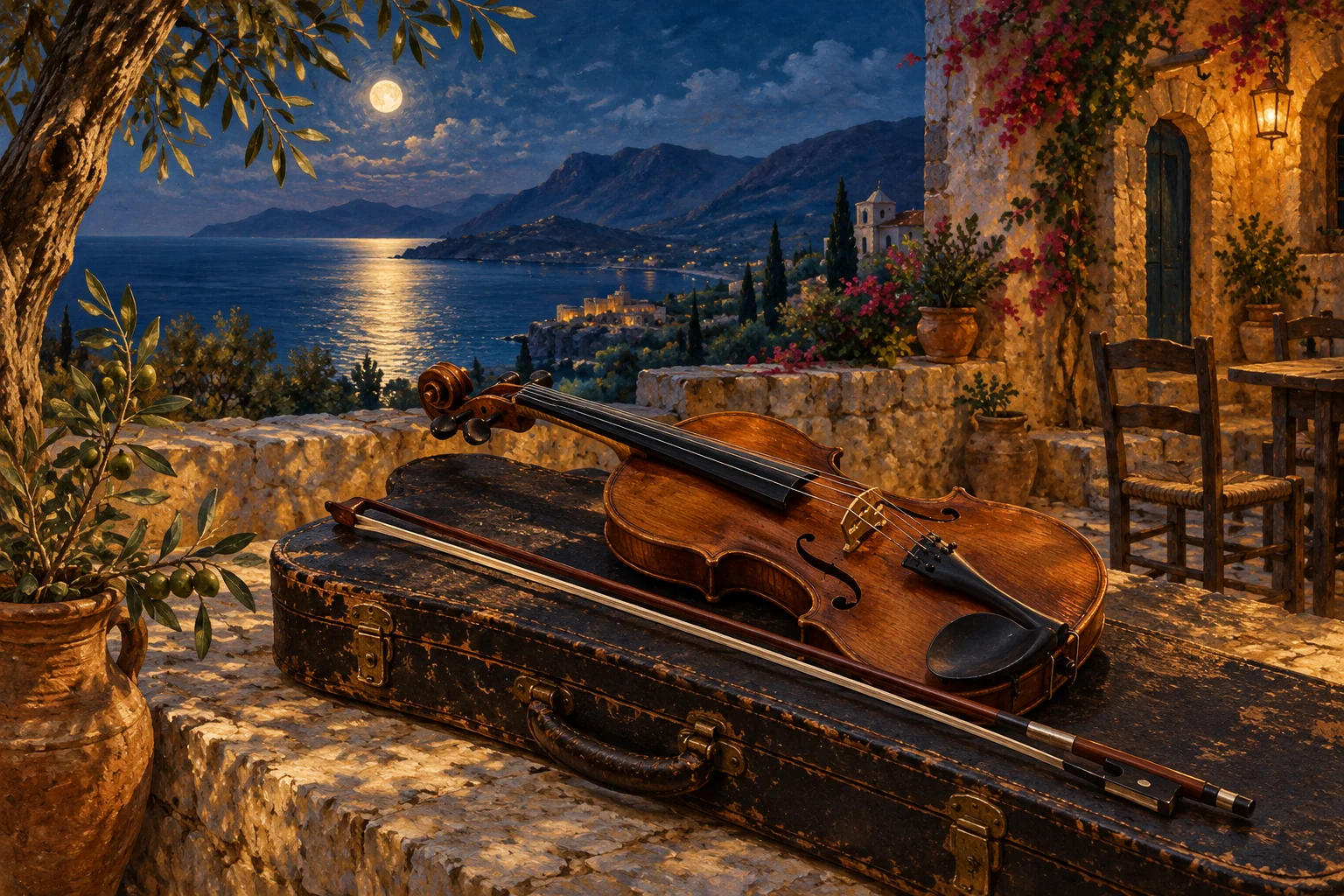
The Amargianakis archive explicitly mentions the traditional violin between the instruments of Crete. However, the familiar construction does not automatically tell how someone uses her in a local music practice. A violin can play a different role in various ensembles and repertoires. Ask not only which instrument you hear, but also how the melody is formed, who guides and for what occasion is played. The same body can be part of very different musical conversations. That is a reason to listen carefully to the performance before classifying it on its appearance.
A concrete duo from Sitia
The eastern reportage of Domna Samiou documents Yannis Dermitzakis on violin and vocals with Manolis Dermitzakis on guitars. The fragments from Sitia out 1976 provide a direct listening input. Notice how the instrument relates to the voice: does it take over a thought, does it make a start or does it keep the movement going between text lines? These are questions to the recording, not fixed answers. The names and instruments in the documentation make it possible to describe the collaboration more specifically than with only the term traditional Cretan music.
The beginning of a tone
An ironing instrument can briefly turn on a tone, grow or almost seamlessly form from a previous movement. Pick one high tone and listen to the first fraction of it. Do you hear the bow, a little glide motion or a clear pitch? Then go to the end. Is the tone aborted or recorded in something new? Such details can strongly colour the impression of a version. They remain partly dependent on recording quality and microphone distance, so compare them within the same fragment before drawing conclusions about an entire playing style.
Compare without looking for one winner
Put a violin fragment next to a lyra fragment with a similar musical function. Start with a modest comparison: where do you recognize a rounded phrase, how is repetition completed and what space does the guide have? Differences can arise from instrument, player, repertoire or recording situation. You don't have to attribute them all to construction. The goal is to hear more possibilities. The question of which instrument is the most truly Cretan often closes the listening too early and makes concrete local practices unnecessarily invisible.
The singer may also be the player
When one person sings and plays, you may hear how both activities alternate. Focus on a transition from singing to instrument. Does the same melodic thought return, or is a new gesture placed? Check the available view of how the performer communicates with the others. Eye contact and a small movement can be informative, but do not fill in their meaning too clearly. An execution situation consists of more information than a camera saves. The audible order therefore remains a firm starting point for your description.
Listen further: make two short portraits
After a violin fragment write down five concrete observations: a commitment, a return, an decoration, a moment of accompaniment and a silence. Do the same for a lyra fragment. Then compare the two lists without general value judgements. What words did you have to change and which were useful for both? Write down the performer and source with each fragment. This creates a small portrait of two performances, rather than a collection of big statements about complete instruments. It makes Crete's musical map richer and invites to discover even more line-ups.
Sources & Listen inputs
- University of Crete instrument archive
Description and archive entries for the instruments of Crete; refer to performer and date when recording.
- Domna Samiou East Kreta
Fieldwork reportage off 1976; Sitia and surrounding villages. With Yannis and Manolis Dermitzakis and fragments of mantinades and assylies.
Sources checked for 29 October 2026. The listening questions are newly written exercises; they do not attribute a predetermined result to a recording. The external archive pages contain where available their own audio or video.