GREEK MUSIC · DIVISION 16 / 20
Byzantine vocals: melody in service of the word
Listen to vocal liturgy from text, phrase, transfer and space.
A sung text can make a room feel different. With Byzantine vocals, the word is a central starting point for the musical presentation. Listen to how a syllable is worn and a sentence is rounded, and the sound gets more direction than just the general label churchly.
A living liturgical practice
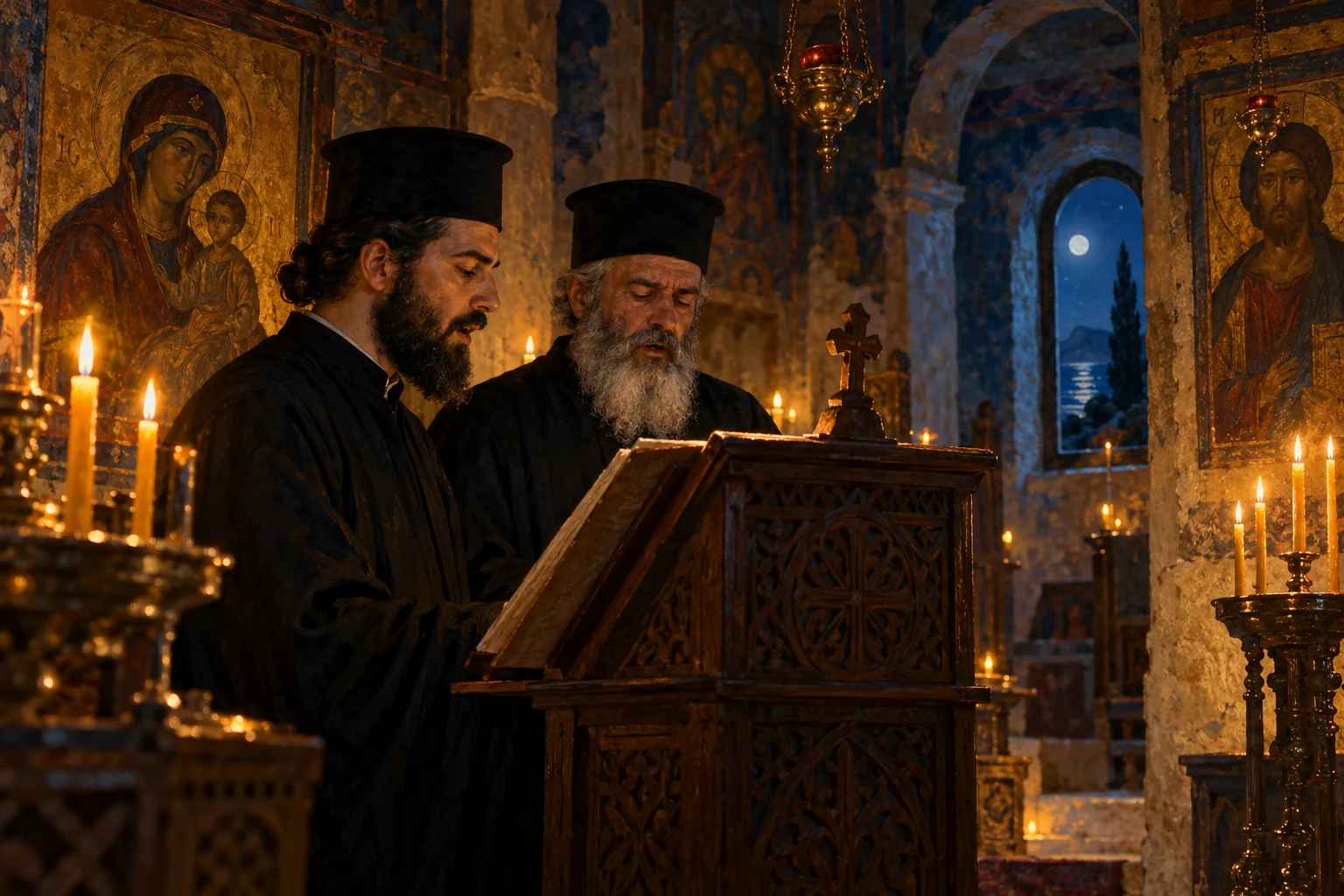
UNESCO describes Byzantine vocals as vocal art that is closely linked to the liturgical life of the Greek Orthodox Church. It is a living transfer with own knowledge and customs. The heritage registration from 2019 There is no evidence that any current execution on every detail is unchanged from a distant past. It recognises a practice that is maintained by people. This file gives a first listening input. The liturgical function of a specific singing requires title, text, opportunity and explanation of the tradition involved.
The word gives the melody work
Start with one short singing. Where are the clear lyrics and which syllables get more time? You don't need to fully understand the text to hear differences in speech, but for their meaning a reliable translation helps. Then compare a spoken reading of the same words when available. The comparison can show how vocals stretch time, shift attention or make a round audible. Treat your impression as an interpretation. The reason for a certain musical choice is not always direct from the sound alone.
One melodic line can have a lot of voices
UNESCO calls the vocals essentially unanimous and describes a system of eight modes or tones. A choir therefore does not have to do the same as a western multi-voice choir with independent moving parties. Listen to what the voices really do. Do they move together, give a voice a bet or do you also hear a kept sound? These concrete observations are more helpful than taking the number of people present as a measure of musical complexity. After all, a common line can be formed very precisely and require a lot of knowledge about text and presentation.
Time without ordinary song expectations
When you are used to listening to verses and choruses, a liturgical phrase can have a different course than you expected. Don't go looking for the next chorus. First follow the breath, the text and the moment when a sentence closes. Which sounds seem to linger and which bring the movement forward? Do not automatically set the recording to one level of quiet atmosphere. There can be clear differences in emphasis and tension. By listening to shorter passages again, an initial continuous sound becomes a recognizable musical act step by step.
Learning a voice
The UNESCO description emphasizes the transfer through listening and preaching, in addition to study and education. Think of what a student should pick up: a starting point, the length of a movement, a text accent and the completion of a sentence. A written tool can be important, but becomes meaningful only within the knowledge of practice. Try to remember a short fragment yourself and compare your memory with the source. You'll soon find out what details your hearing simplifies. That exercise gives respect for learning without suggesting that an outsider controls the tradition after one listening session.
Listen further: keep text and space separate
Choose a fragment with mentioned singer or choir and a clear title. First write down what the voice does and then what the space adds. A long reverberation can overlap two successive sounds; this is not the same as two consciously sung parts. Then find the text or a reliable translation. Does the understanding of the words where you hear the musical boundaries change? Finally, compare carefully with changing vocals in rizitika. The comparison is about an audible organisation of bets and answers and does not in itself prove a direct historical origin.
Sources & Listen inputs
- UNESCO byzantine chant
Heritage file, registration 2019. Liturgical function, vocal performance, eight-mode system and transfer.
Sources checked for 29 October 2026. The listening questions are newly written exercises; they do not attribute a predetermined result to a recording. The external archive pages contain where available their own audio or video.