GREEK MUSIC · DIVISION 15 / 20
Dimotiko tragoudi: a landscape of local voices
A listening card of local repertoires and the events they sound like.
The Greek traditional song is bigger than one recognizable rhythm or instrument. Dimotiko tragoudi offers an entrance to a landscape of local repertoires and occasions. The most interesting question is often not how Greek sounds, but who performs it where and for what.
A collective name remains a beginning
A broad name helps to find material, but can also hide differences. The Samiou archive organizes his songs, among other things, to region, species, dance and occasion. This allows for a different approach: first choose a documented example and work further from there. A lamentation song, a wedding song and instrumental dance music make different demands on the performers. They do not all have to have the same form or function to be discussed within a wider traditional music practice. The collective name is a gateway, while the description of each document gives direction to listening.
The opportunity changes the meaning
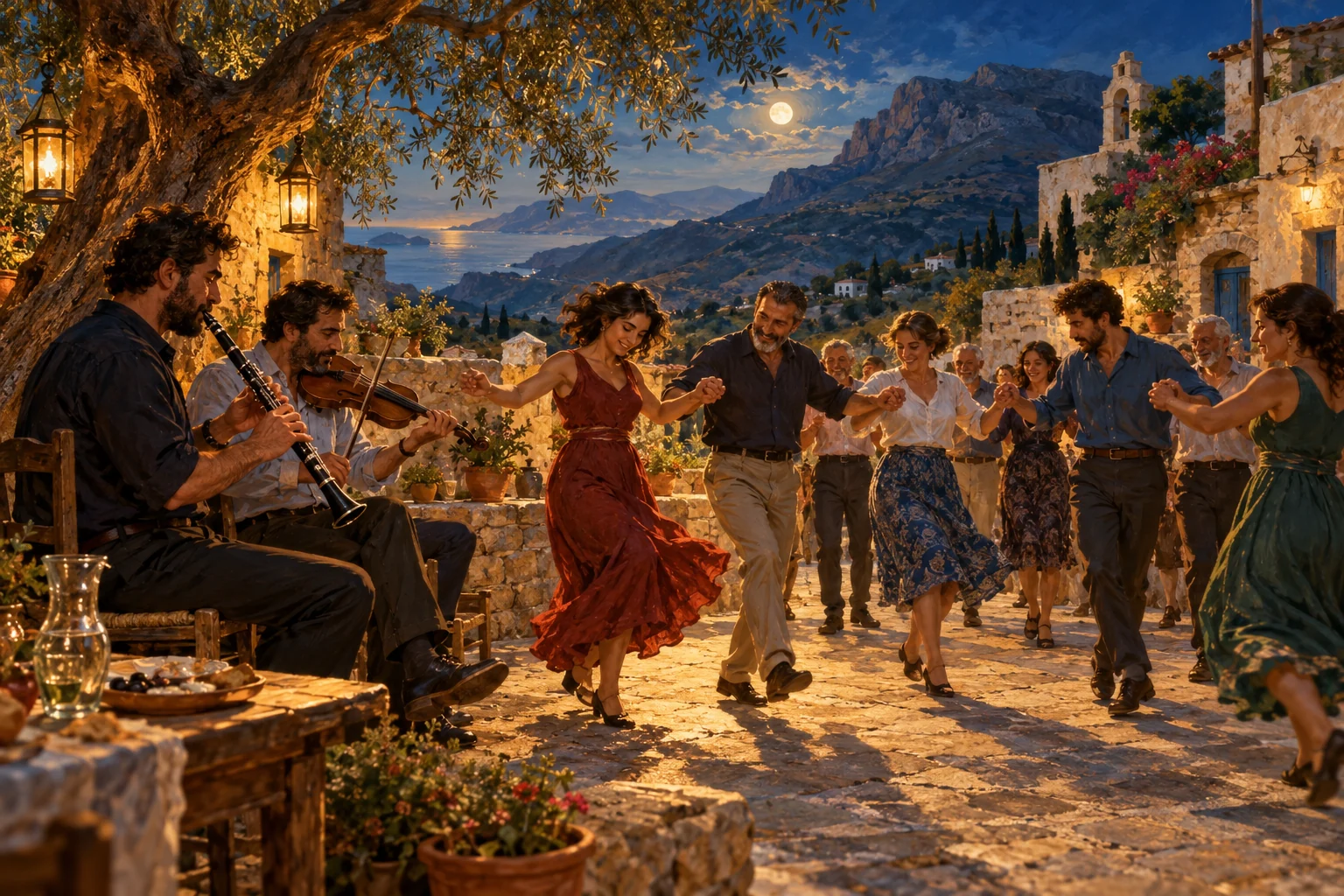
Ask what people do during a performance. Are they sitting at the table, walking together, dancing or focusing their attention on one narrator? The same listener can expect something different from music in each of those situations. Therefore, compare examples of which the opportunity is known. If it is missing, it may remain visible as missing information. The sound can give clues, but not every social use is reliably distracted from the melody. A nice shot is not a free pass to invent a complete village history or ceremony around it.
Instruments make a place not only
The instrument overview of the Samiou association includes clarinets, violins, various lutes, bagpipes and percussion. That diversity warns against one standard image of a Greek ensemble. Listen to how the parties work together in the chosen fragment. Who carries the melody, who marks the progress and where does a voice get room? An instrument can belong to more than one region or repertoire. Combine a recognizable sound with the source data instead of using it as an infallible geographical indication. After all, musicians and musical ideas move between places.
Learning verbally means actively remembering
Learning a performance by listening and participating requires attention to details that are not self-explanatory. A singer keeps words, a player recognizes phrases and participants know when they can answer or connect. Recording changes the possibilities of repeating and searching back that material. They don't completely replace the original event. Try singing a short phrase and then check your memory. What details were you holding and which one did you fill out yourself? That exercise shows how listening is an active choice, also for someone who works only at home with an archive recording.
Storage is also storing information
An archive consists of more than sound files. Names, dates, notes and descriptions help to understand the sound. The Samiou association describes its collection as a combination of recordings and associated documentation. That's a useful model for your own listening list. Not only save the title of a favorite fragment, but also the page on which performer and context are listed. A later compilation can place the same sound in a new order and thus tell a different story. Good data reveals what such a new presentation is based on.
Continue listening: compare functions
Choose one table song and one dance fragment from different regions in the archive. Write down how each example begins, how others can participate and where there is a clear round. Then compare a Cretan rizitiko with the table song. What agreement is the occasion and what difference do you hear in the execution? The aim is not to place the different areas on a ranking list. You build a listening card where place, function and musical form remain visible separately. This makes a large collective name step by step a collection of concrete encounters.
Sources & Listen inputs
- Domna Samiou's song catalogue
Direct entry to the regional catalogue, type of song, performer and additional information.
- Domna Samiou List of instruments
Instrument names and descriptions; access to the documentation of its own fieldwork and execution archive.
- Domna Samiou documentation of its own archive
Description of field recordings, notes and cataloguing; source for the importance of data in addition to sound recording.
Sources checked for 29 October 2026. The listening questions are newly written exercises; they do not attribute a predetermined result to a recording. The external archive pages contain where available their own audio or video.