A personal choice from the guide to spring, summer, autumn and winter. Each number connects a story, a menu, a place and a Greek sentence.
THE SPRING EDITION
Green on the table, space in the day
A reading number about herbs, green pies and sitting outside again. Use the selection as inspiration; this is not a current weather or harvest forecast.
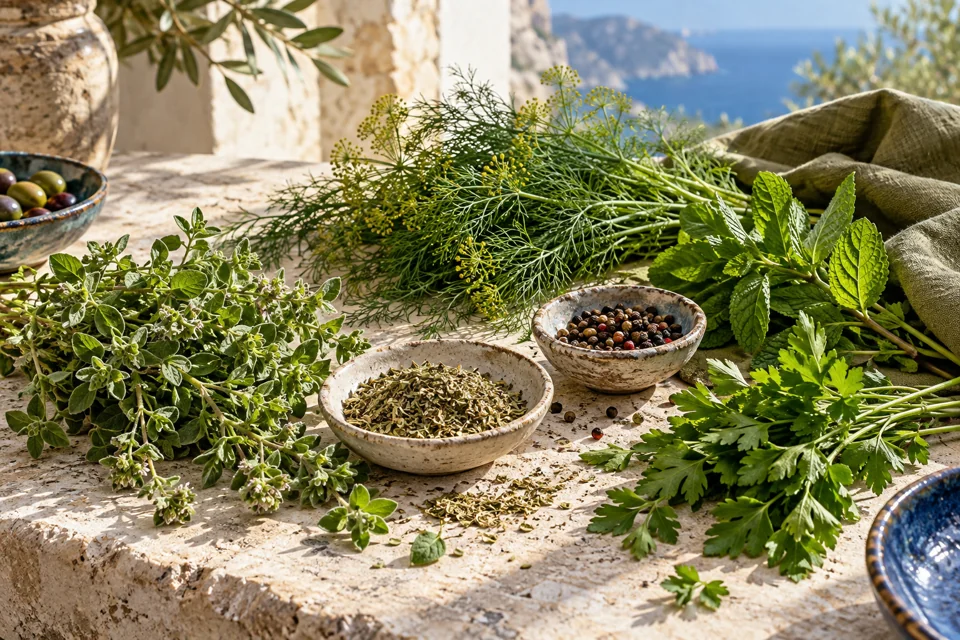
Atmosphere at spring · AI image, no documentary location image
Choose one green accent and follow it through the meal: dill in a filling, parsley with beans or mint in a cookie. A season becomes concrete when you see how the same colour can carry different flavors. Start with the market with the question what is really available.
Connect a short walk with a coffee and a simple dish. Read one piece about herbs in advance and then try to find a name. The goal is not to finish as many subjects as possible, but a recognizable thread between landscape, word and sign.
An edition about cold coffee, simple fish dishes and a table that doesn't have to be overcrowded. Choose excursions according to the actual circumstances.
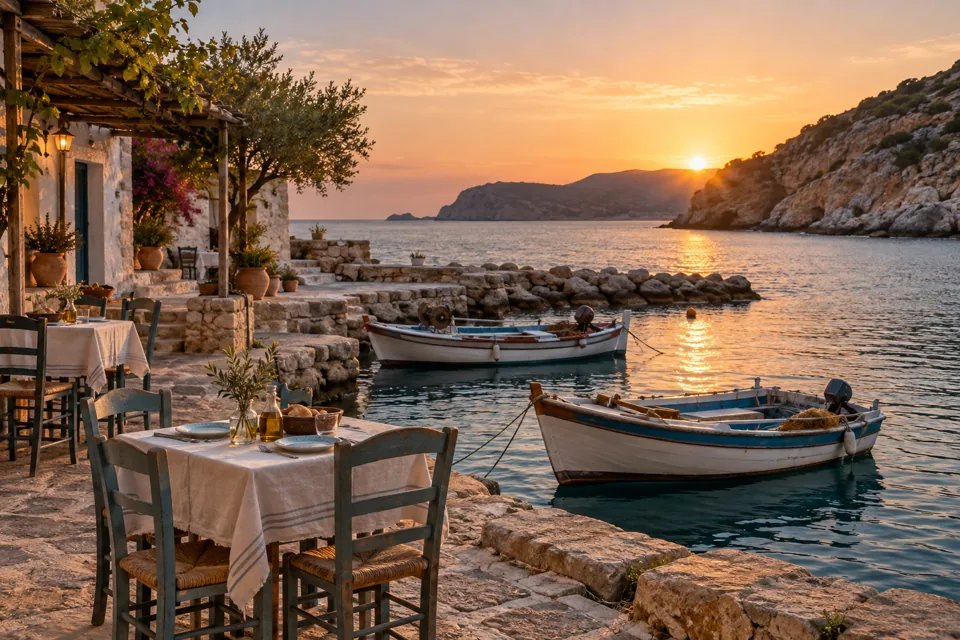
Atmosphere at summer · AI image, no documentary location image
On a warm day a small table can be enough: tomato, bread, something from the grill and a fresh sauce. The rhythm of preparing and serving becomes more important when you want to keep food cool. Put down small portions and make up.
Also look for shade and peace in your reading route. Start with the differences between frappé and freddo, then read a fish menu and choose one Greek question for the meal. A long coffee moment might as well be a travel experience as an extra stop on the coast.
Oil, wine, bread and a quieter village visit form this selection. Harvest moments vary per year and producer; ask what happens at that time.
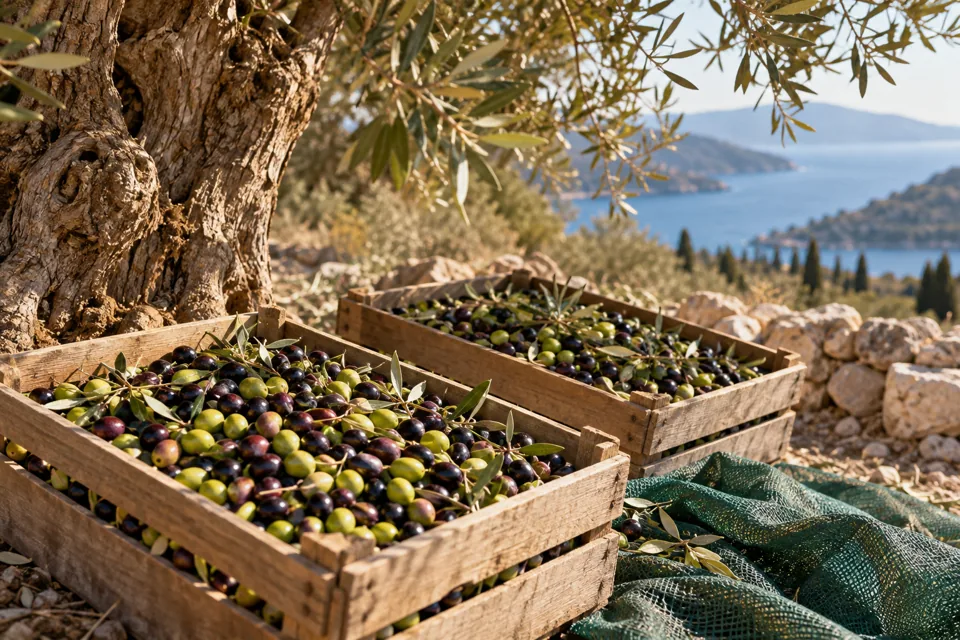
Atmosphere at autumn · AI image, no documentary location image
An olive is not oil yet and a grape is not wine yet. Between raw material and table are choices that you better understand by looking at one at a time. Ask not only when it is harvested, but also why a producer chooses a particular method.
Make a simple taste at home with bread and oil or compare a wine with two different snacks. Keep your notes small and precise. What you really smell or taste is more useful than a long list of words you read somewhere.
A selection of legumes, bread, coffee and sweet cuisine. It is a culinary reading route, not a promise about opening or back on the island.
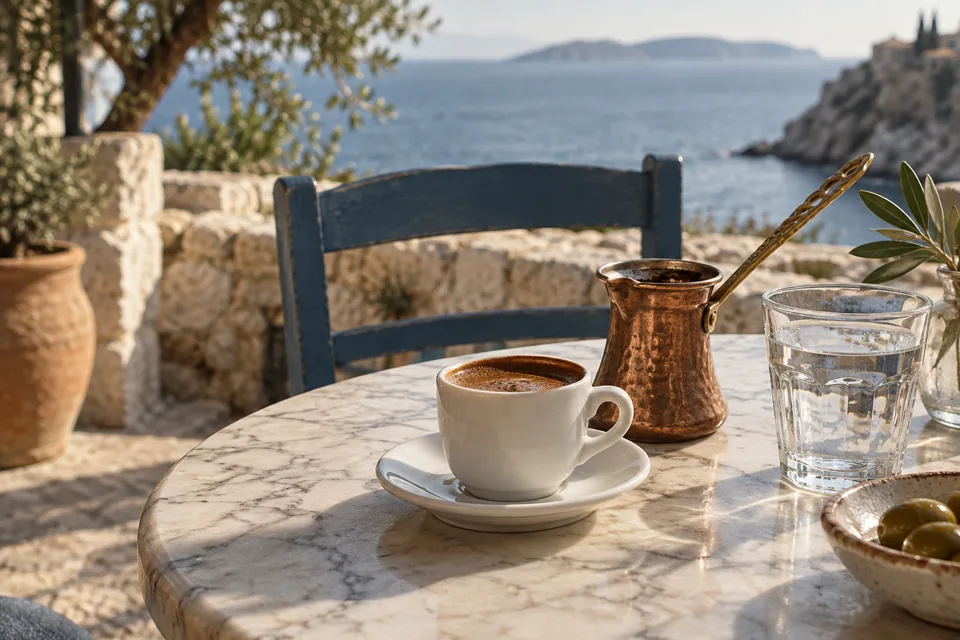
Atmosphere at winter · AI image, no documentary location image
A pan of lentils or beans requires different attention than the quick snack on the way. There is time to smell, to judge moisture and gap and to choose the sour accent only at the end. That makes the ordinary kitchen a good subject for a winter reading day.
When reading, put a small coffee or herbal drink and then choose one dish to make yourself. Connect the action with a word: stirring, cutting, tasting. Thus, kitchen and language become the same exercise space, without the meal becoming a lesson.