READ · TEST · CONNECT

The sea on your plate

Learn to read a fish menu: from sardine and sea bass to squid, octopus and the questions you can ask before ordering.

Atmosphere at the sea on your plate
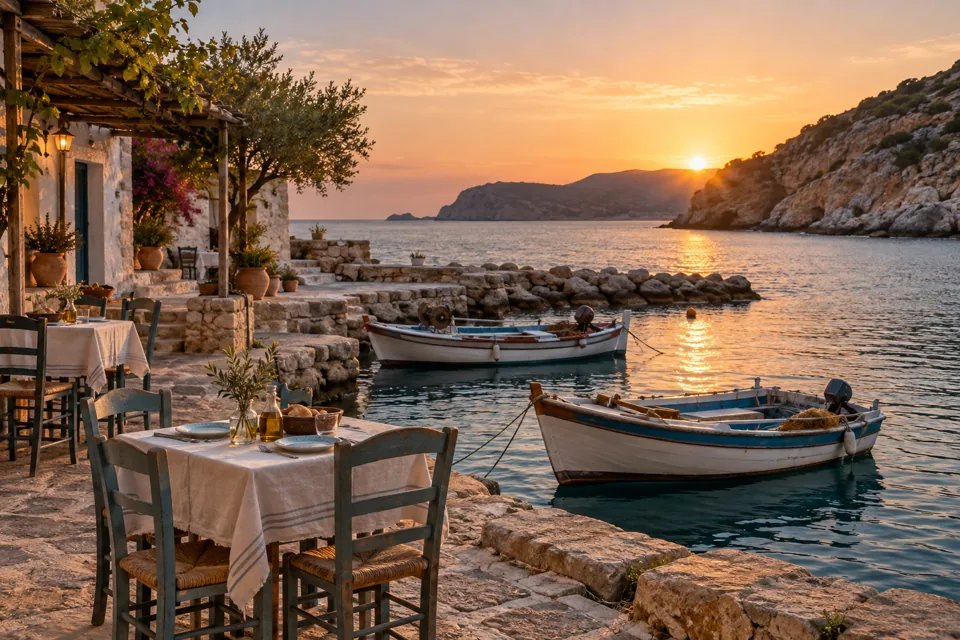
Atmosphere at The Sea on your plate · AI illustration, no documentary location image

10 chapters · Greek words, practical explanations and connected reading routes.

All 10 chapters

01 · FLOOR

The fishing card starts with questions

A taverna by the sea can be a beautiful environment, but does not automatically tell where the fish comes from or how it is sold. Ask what is available, how it is prepared and whether the price per portion or per weight is valid.

Let a fish sold per kilo confirm the weight and the expected total price. This way you can deliberately compare with a dish per serving. A nice presentation is pleasant; a clear explanation about product and preparation is at least as valuable.

02 · FLOOR

Tsipoura and lavraki

Τσιπούρα is gold-brass; λαβράκι Both can be found on a map as a whole fish, but the name doesn't say whether it's a crop or a wild catch.

With a whole fish, the weight of head and bones remains part of what you order. Ask if sharing is possible and which side dishes are included. Take your time with your food: a fillet and a whole fish require a different attention for bones.

03 · FLOOR

Sardines, anchovy and mackerel

Σαρδέλα - sardine, γαύρος Anchovies, anchovies and σκουμπρί The size and character of each mackerel are different from the size and character of each mackerel. Small fish is often eaten as a dish. Ask which preparation is on the map instead of going by the species name alone.

A small plate with bread, lemon and a fresh salad can be enough if you share other mezedes. You don't have to make a small fish a reduced version of a large main dish; just several simple dishes can form a complete meal.

04 · FLOOR

Kalamarakia: texture before a thick crust

Καλαμάρι squid means: in dishes you can also see kalamarakia. The preparation can be fried, grilled or stoked. Those techniques produce very different structures, so ask on if only a short name is on the map.

For home you should start with cleaned squid and a full recipe. Dep dry when the recipe asks for baking or frying. Follow the safety instructions for hot oil and do not fill a pan with too large a damp charge at the same time.

05 · FLOOR

Octopus: tenderness and grilling are two steps

Χταπόδι is octopus. A short moment on the grill can give colour and roasted smell, but does not make a sturdy piece tender. In many preparations therefore a separate cooking phase precedes.

Use a reliable complete recipe for home use or a suitable pre-cooked product. In addition to the cooking temperature, also assess whether the meat is pleasantly soft. A fork that slides easily into the thick part provides information about texture; this does not replace food safety advice for the chosen product.

06 · FLOOR

Shrimps, mussels and saganaki

Γαρίδες long shrimps, μύδια Saganaki can refer to a hot pan preparation, often with tomato and sometimes cheese. The exact sauce differs; ask for the ingredients when this is important.

Fish, crustaceans and molluscs are different allergen categories. A shrimp dish can also contain milk or other ingredients. Please state an allergy clearly and do not just rely on a short translation of the dish name.

07 · FLOOR

Preparation words on the map

Ψητό roasted or grilled. Στη σχάρα Grid dynamometer. Τηγανητό Baked or fried, depending on the preparation. Στον φούρνο Odour from the oven. Ψαρόσουπα Oh, fish soup.

A small word changes your expectations. A whole fish from the oven can be prepared with vegetables and moisture, while a fish from the grid dryer is served with dressing separately. Ask how it is served if you are looking for a particular style.

08 · FLOOR

A simple fish meal at home

Choose two fish fillets for two people, pat dry and use a thin layer of oil. Prepare them according to a suitable pan or grill recipe. Measure in the thickest part and hold at least 63 °C for fish, as in the BBQ temperature guide.

Give lemon and ladolemono separately. With boiled potato and green vegetables, the plate remains clear. Choose a grill basket when a fillet is vulnerable; allowing a beautiful fish to break unnecessarily only makes turning harder.

09 · FLOOR

Fresh, frozen and coming from

Frozen is not automatically a lesser choice; treatment, storage and use determine a lot. Ask honestly what the product is and how it is preserved. An exclusively romantic story about the sea does not answer that.

For a more sustainable choice, species, catch area and catch or farming method are more useful than a general promise. When purchasing, consult a current fish guide. This page does not create a universal ranking of good and bad species.

10 · FLOOR

Phrases for the fish taverna

Είναι φρέσκο ή κατεψυγμένοIs it fresh or frozen? Η τιμή είναι ανά κιλόIs the price per kilo? Πόσο ζυγίζει; How much does it weigh? Χωρίς σάλτσα, παρακαλώ. Without sauce, please.

Choose three sentences and read them before ordering. A short clear question helps more than a long sentence you don't understand. The menu scanner can help with reading; lets price, product and allergens be confirmed by the staff.
Sources & Read Account

The sources support product names, regional context and specific applications. The test assignments, reflections and cooking exercises are their own editorial explanation. Images are AI illustrations.

FLOOR · FROM FISHING CARD TO ORIGIN

Better understand the fishing map

Greek names, catch and grow, freezer and the questions you make a good choice with.

Greek fishing names on the menu

A name helps you order; the name does not yet tell you where the fish has been caught or farmed. The European Commission publishes the Greek trade names with scientific names. Use this combination with a label or when asking the fish farmer. Culinary collective words can be wider than one species. [V1]

Greek · pronunciationDutch / speciesA question when ordering
Σαρδέλα · sardhélaSardine · Sardina pilchardusAre they grilled or baked?
Γαύρος · ghávrosEuropean anchovies · Engraulis encrasicolusIs this a hot dish or marinated fish?
Τσιπούρα · tsipoúraGoldberry/dorade · Sparus aurataWas this fish grown or caught wild?
Λαβράκι · lavrákiEuropean sea bass · Dicentrarchus labraxWhat is the weight and price of this fish?
Κουτσομούρα · koutsomoúraMul · Mullus barbatusIs the price per serving or per kilo?
Φαγκρί · fangríBlackberries · Pagrus pagrusWhat kind and origin are on the label?
Καλαμάρι · kalamáriSquid; the menu name only does not specify the species.Fresh or frozen, grilled or fried?
Σουπιά · soupiáSeacat; a group other than squid.Is this stewed or grilled?
Χταπόδι · chtapódhiOctopus; ask separately for species and origin.How was it prepared and finished?
Γαρίδες · gharídhesShrimps; a collective name for different products.Which shrimp are used, and are they peeled?
Μύδια · mídhiaMosselen.What sauce is included and does it contain dairy?

The first six types of links have been checked in the European database; pronunciation is a Dutch approach. [V1/7V6]

Fresh, wild and frozen are different questions

.Fresh pine is about treatment and condition; .wild pine or . farmed pine is about production. A farmed fish can be sold fresh. A wild fish can be frozen. .Greek pine does not automatically tell which sea or farm a product comes from. Keep those questions aside.

Wild caught

Ask for species, catch area and catch method. Large or expensive is no proof of a better choice. A small fish also requires context: a species name alone is not a sustainability hallmark.

Cultivated

Ask about the production land. Not only do you assess a fish on the word "grow', but also on the obvious origin, cooling and preparation. Tsipoura or lavraki on the map does not decide the question.

Freezing or thawing

Freezing is a storage treatment. . .Ontdooid . does not mean the same as spoiled. Ask how the product has been treated and prepared. Let an attractive presentation not replace provenance information.

European information requirements apply to many unprocessed fishery and aquaculture products in retail trade, including commercial and scientific names, production methods, areas of fishing or production and, where appropriate, defrost status and gear category. [V7]

The preparation words behind the name

On the mapWhat you order
Στη σχάρα · sti scháraAsk a whole fish for help with filleting if you like it.
Τηγανητό · tighanitóFry or fry in oil. Ask for flour if gluten is a problem.
Στον φούρνο · ston foúrnoFrom the oven. The accompanying vegetables or potatoes can be part of the same dish.
Βραστό · vrastóAsk if you get a fish, broth or soup.
Μαρινάτο · marinátoMarinated. Lemon or vinegar is no guarantee that raw fish is safe.
Σαγανάκι · saganákiA pan preparation; ask about the concrete sauce and cheese, because the name does not give a fixed ingredient list.

If you have a grilled fish, you can choose cooked green and lemon; if you have a sauce dish, bread is handy. These are serving ideas, not rules. Ask one dish less than to fill the table immediately: you can usually order an extra dish later.

Order: first weight, then price

At a price per kilo you ask for the weight of the fish you choose and the expected total price before preparation. Also ask if the weighted weight is the whole raw fish and whether side dishes are counted separately. This way you do not accidentally compare a whole fish with a fixed portion price. Let the answer write down if necessary.

Είναι φρέσκο ή κατεψυγμένο; Is it fresh or frozen? A more targeted follow-up question is: Έχει αποψυχθεί; Is it thawed?

Είναι ιχθυοτροφείου; Is it from a nursery? Πόσο κοστίζει αυτό το ψάρι συνολικά; What does Póso kostízi aftó to psári sinoliká cost? What does this fish cost in total?

For allergies, fish, crustaceans and molluscs are separate groups. Name what you should not have and ask for shared fry oil, working surfaces and sauces. Only removing an ingredient from the top does not solve cross contact.

From fish shop to holiday refrigerator

Take a cooler bag with you in the warmth, reduce the time on the road and put fish in the refrigerator immediately. The Food Centre recommends that fresh fish should be eaten the same day and not stored for more than one day at 4 °C. Prepared fish can be kept refrigerated for up to two days. Follow a shorter or more specific packaging advice if that is true. [V8]

Use clean kitchen utensils and keep raw fish separated from food that is already ready. Taste raw fish is not a freshness test. Home marinating in lemon does not make unknown raw fish safe. Choose without appropriate knowledge and controlled treatment for fully cooked fish; a restaurant name on a recipe is not a safety procedure.

Sources at this floor

  1. V1 · European Commission: sardine and trade names
  2. V2 · European Commission: anchovy
  3. V3 · European Commission: dorade and seabream
  4. V4 · European Commission: Sea bass
  5. European Commission: mul
  6. V6 · European Commission: database on trade designations
  7. V7 · European Commission: Guide to fish labels
  8. V8 · Food centre: fish storage