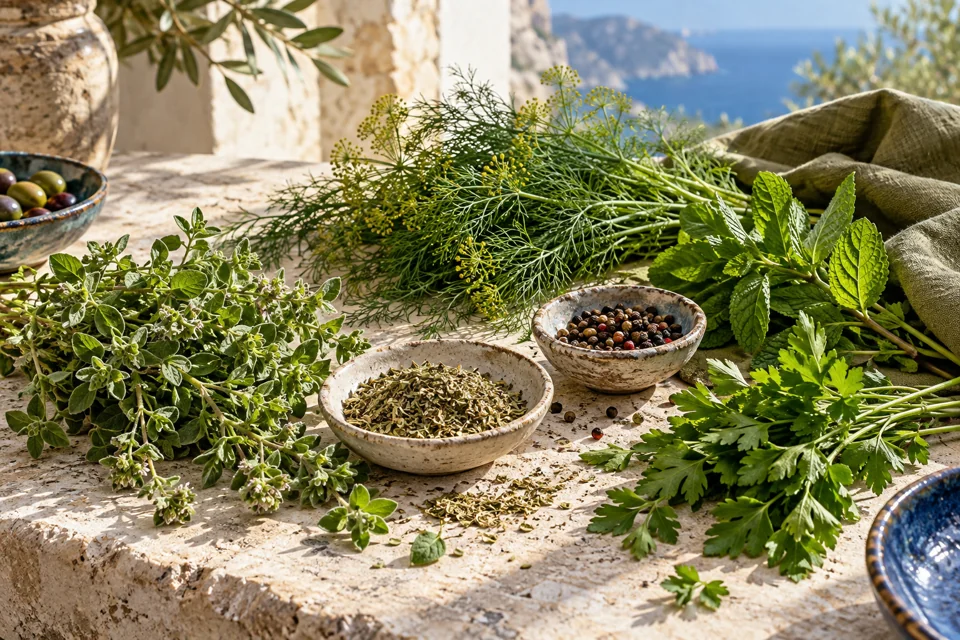
A tomato with oregano, a warm pan with cinnamon, a patty that smells like mint: herbs change not only the strength of a flavor, but also the direction of it. Lemon can give freshness, olive oil carries smell through the dish and a herb lays a recognizable accent. With a small stock you can cook very different.
This guide starts with smelling and tasting. What do you want to achieve: green and fresh, dry and spicy, warm and round or anise-like? Choose this direction first and only afterwards a jar. A dish becomes more obvious when one aroma is in charge and supports the rest.
Greece has no fixed herb recipe. Islands, cities, families and cooks make different choices. The applications below are recognizable examples and own cooking proposals; not every herb should be required in every dish.
02 · HERBS & SPICES
Herbs, spices and other seasonings
In the kitchen we call mainly leaves and soft stems herbs: parsley, dill and mint. Spices often come from other parts of the plant, for example seed, fruit, bark or flower bud. Cinnamon is bark, clove a dried flower bud. The limit is culinary useful, but not absolute: one plant can deliver multiple flavorers.
Fennel green and fennel seed tastes are related, but have a different structure and intensity. The same applies to coriander leaf and coriander seed. Therefore, they are not just interchangeable in equal quantities. Garlic, onion, lemon juice and salt belong to other categories, but together with herbs determine the balance of the plate.
On a Greek label you often see μυρωδικά for aromatic herbs and μπαχαρικά for spices. Note the singularity μπαχάρι: That can mean specific piment. A jar with that word is not a general herbal mixture.
Rub dried leaves just before use between your fingers. First, add little to a salad; the aroma can become stronger when the leaves absorb moisture.
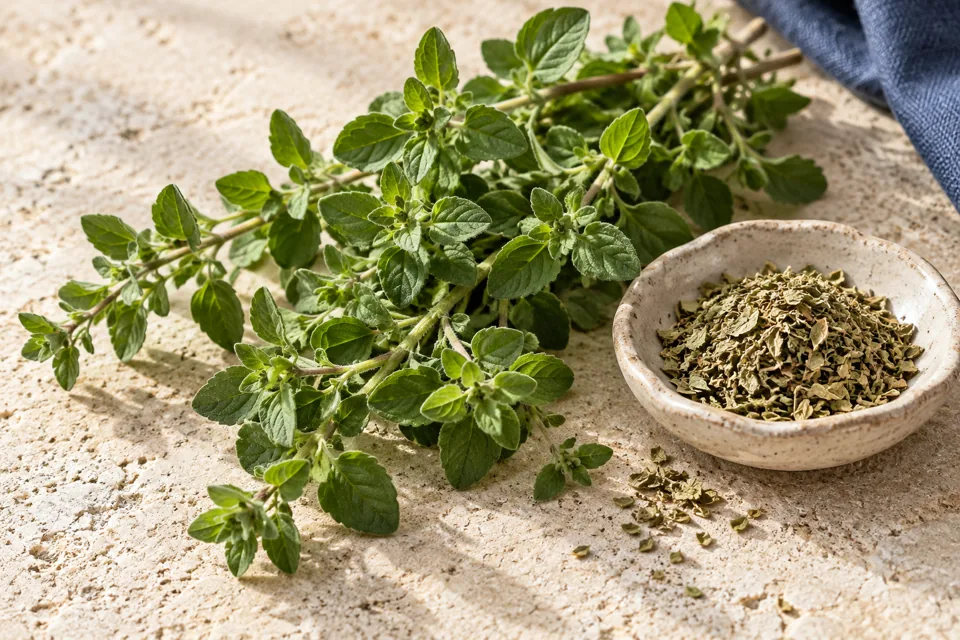
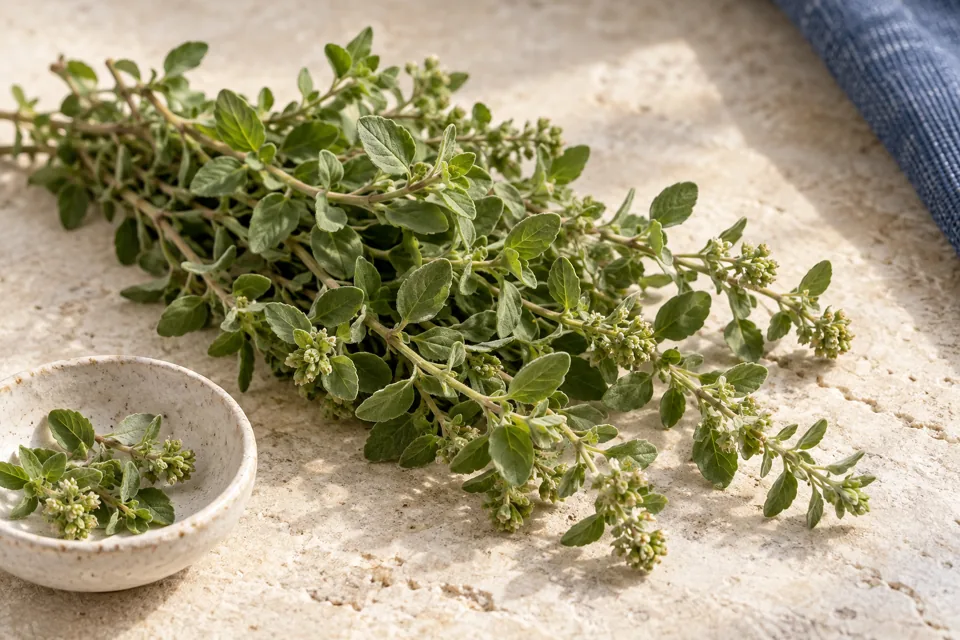
Use oregano as main accent next to lemon and olive oil. A thick layer on bright fire can burn; sprinkle some rather after grilling.
04 · HERBS & SPICES
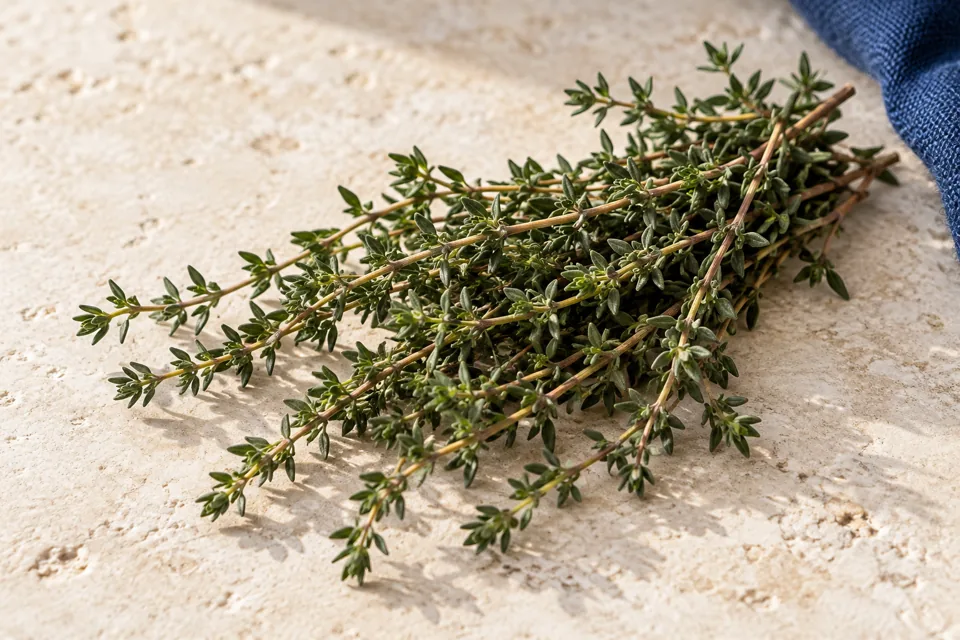
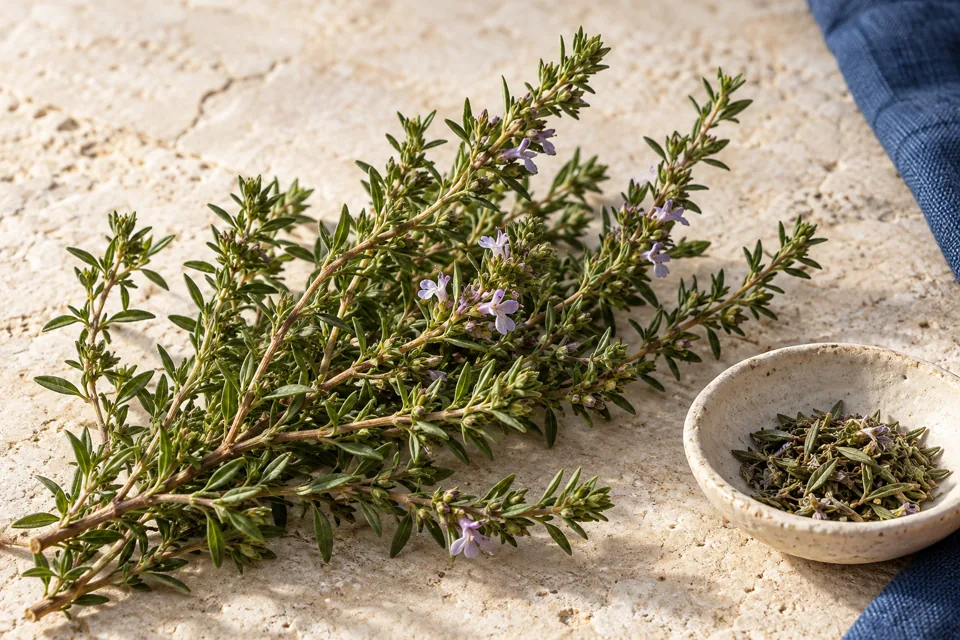
Thyme · θυμάρι
Thyme · AI illustration
Smaak: Warm, woody and sometimes almost flowery. Try with: Oven potatoes, mushrooms and slowly cooked dishes.
Let a small twig gently move along and remove the woody stem.Taste before adding: dried thyme can be quite dominant.
Compare thyme and oregano on a piece of warm potato. Temmy often gives a rounder, woody impression; oregano can come out sharper.
05 · HERBS & SPICES
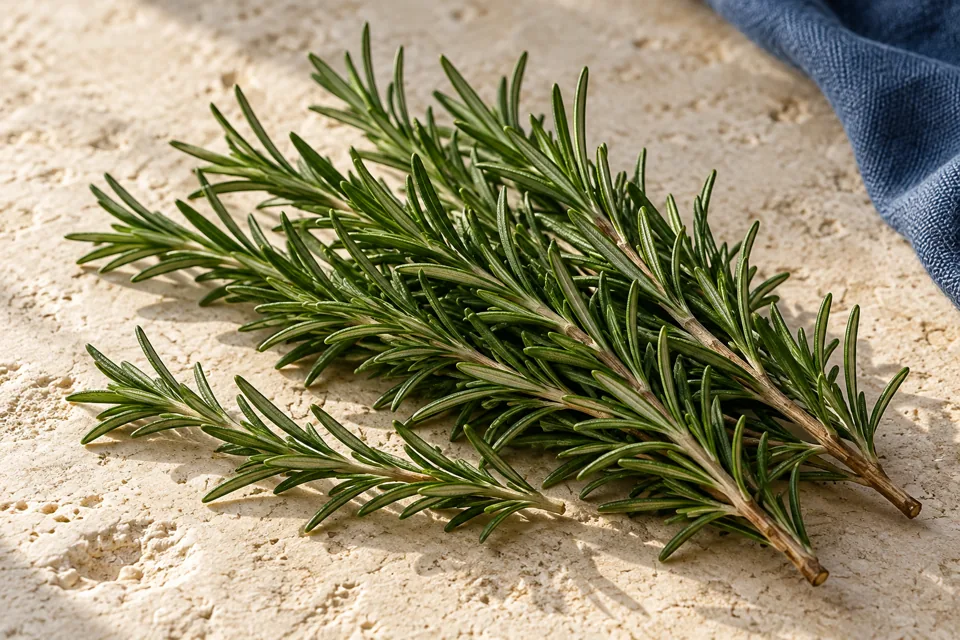
Rosemary · δεντρολίβανο
Rosemary · AI illustration
Smaak: Resinful, powerful and pine-like. Try with: Potatoes, lamb and solid oven vegetables.
Chop the needles very fine or use a whole twig that you remove later. Grove loose needles can eat unpleasantly in a soft dish.
On Crete rosemary is recognizable by snails with vinegar. At home you can explore that direction with baked mushrooms, a small twig and a splash of vinegar.
06 · HERBS & SPICES
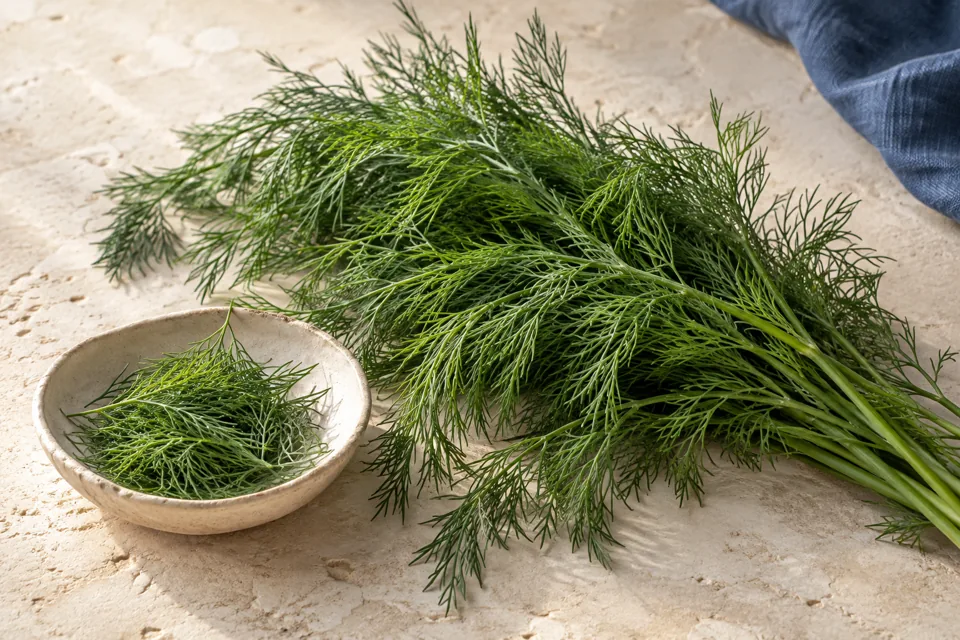
Dille · άνηθος
Dille · AI illustration
Smaak: Green, soft anise and fresh. Try with: Yogurt sauce, rice, spinach, zucchini and fish.
Cut soft stems finely and add a part of the green only at the end. Thus, a warm filling gets both an integrated and a fresh herbal flavour.
Dill and lemon can strengthen each other. Try before adding extra lemon juice: freshness is not the same as acid.
07 · HERBS & SPICES
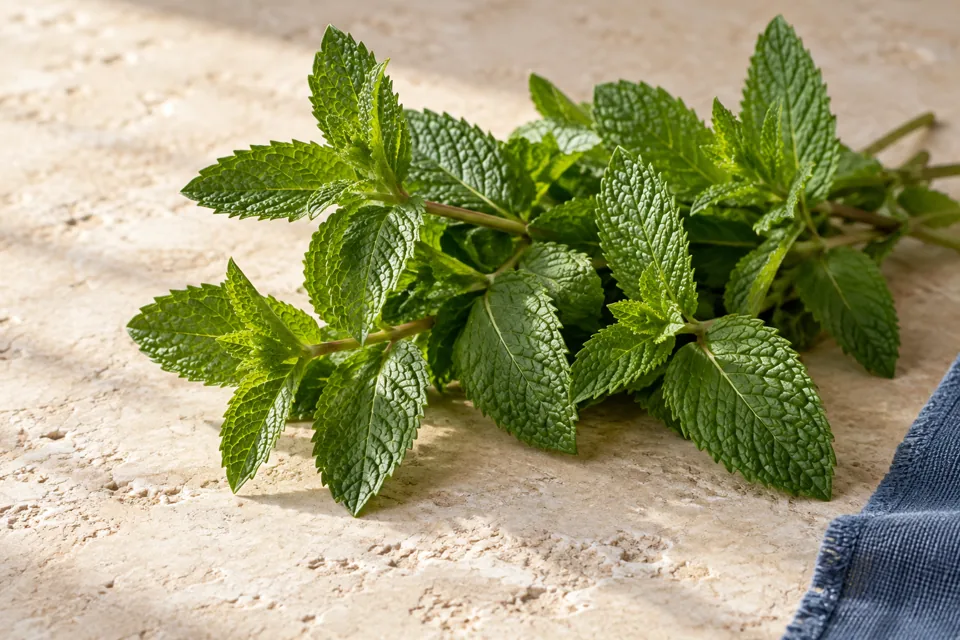
Mint · δυόσμος
Mint · AI illustration
Smaak: Fresh and green; crucifixion is usually rounder than peppermint. Try with: Courgette cookies, meatballs, cheese fillings and salads.
Use the leaves and cut them shortly before mixing. Start with a small part of your bush: mint can quickly take over a mild cheese or zucchini flavour.
Peppermint can taste cooler and more emphatically than the δυόσμος from a Greek recipe. Smell the product instead of just relying on the Dutch name.
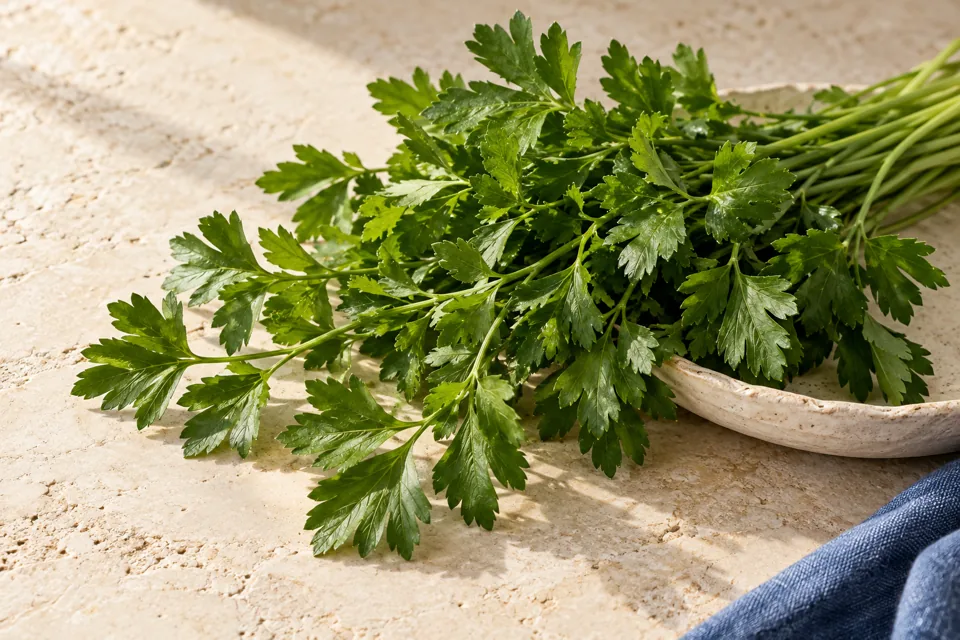
Soft stems can be cut very finely for the basics of a dish; coarse leaves work nicely as finishing. Wash and dry the bushes before cutting it.
Petersley can leave room for other flavors. Use her as a green base and then add a smaller accent of mint or dill.
09 · HERBS & SPICES
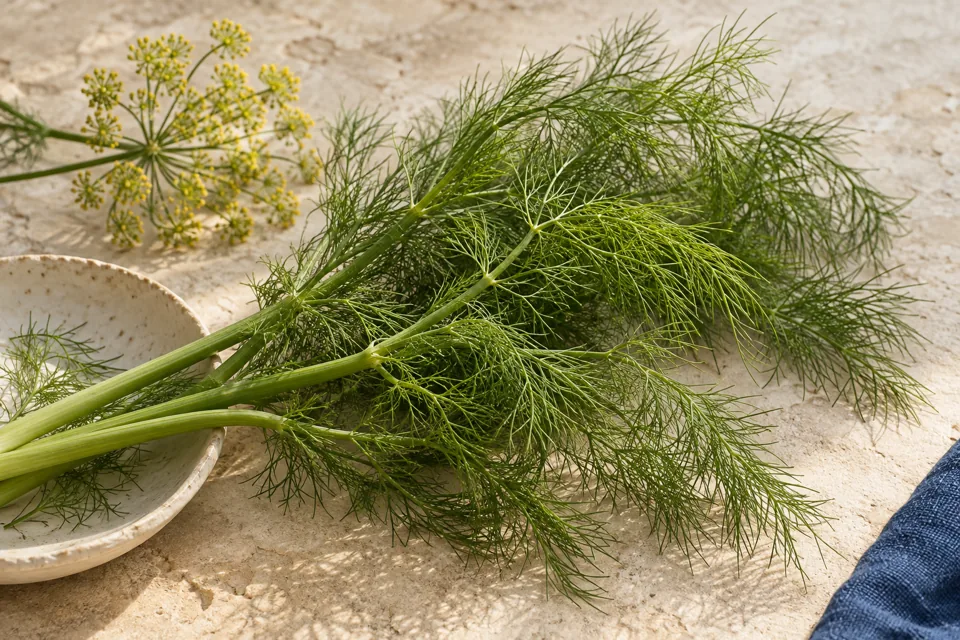
Fennel green · μάραθος
Fennel green · AI illustration
Smaak: Clearly anise, softer and greener than the seed. Try with: Vegetables, beans and rice fillings.
Chop soft chips finely and remove tough stems. Combine for a first sample with leek or spinach, so that the aroma has a soft surface.
The Cretan marathopita revolves around the smell of fennel. A common fennel from the shop provides a different ratio between vegetables, structure and herb.
10 · HERBS & SPICES
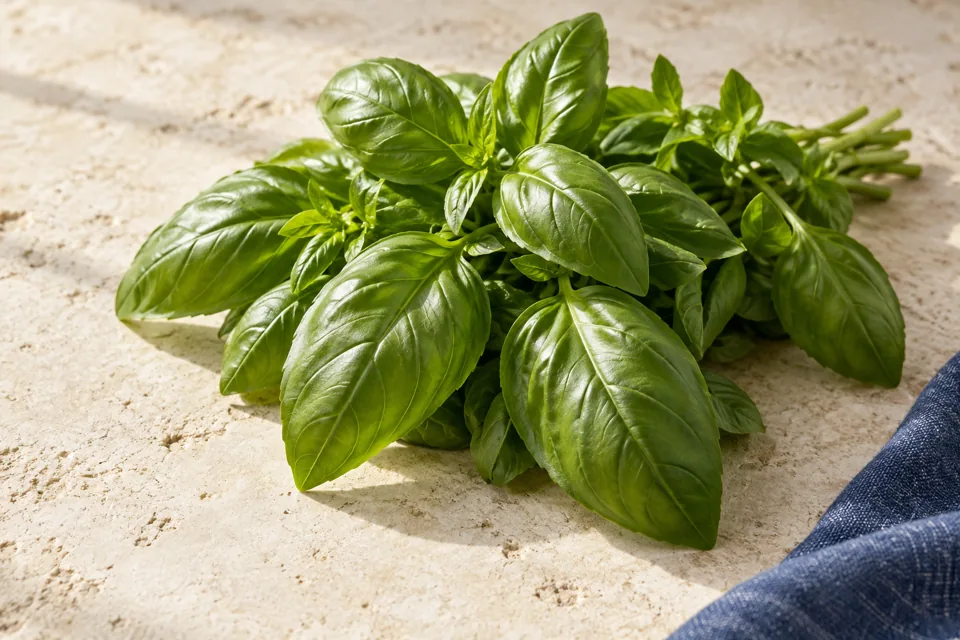
Basil · βασιλικός
Basil · AI illustration
Smaak: Sweet-scented, green, sometimes clovesy. Try with: Tomato, eggplant, soft cheese and a final accent on soup.
Tear or cut the leaves just before eating. Long hard cooking makes the fresh character less recognizable; add for a clear leaf accent only at the end.
Basil is a possible choice, no automatic replacement for oregano in every Greek salad. Make two small portions and compare their character.
11 · HERBS & SPICES
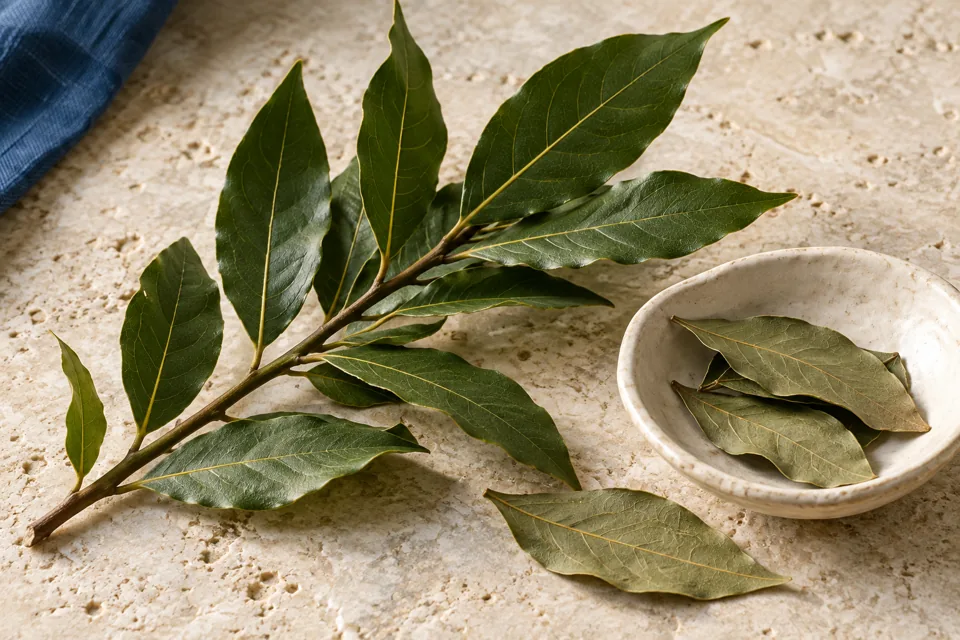
Laurier · δάφνη
Laurier · AI illustration
Smaak: Warm, dry and subtle balsamic. Try with: Lentils, beans, tomato stew and meat dishes.
Allow a whole leaf to be dragged into a moist dish and remove it before serving. The leaf remains tough; fine grinding changes both the dosage and the texture.
The aroma is often a background tone. Taste a spoon of the sauce on its own before you decide that you need another leaf.
12 · HERBS & SPICES
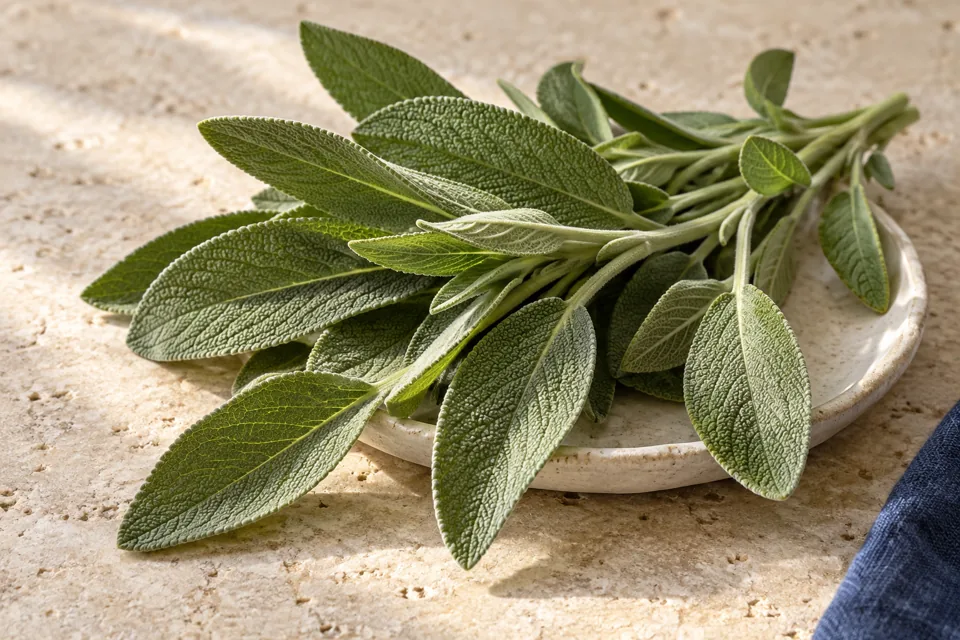
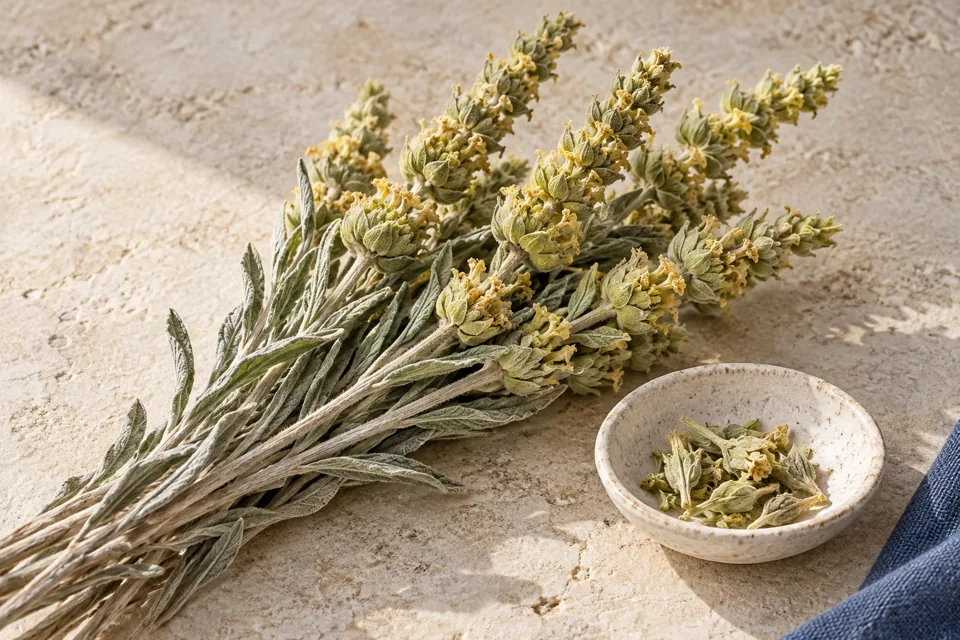
Sage · φασκόμηλο
Sage · AI illustration
Smaak: Earthy, camphory and quite powerful. Try with: White beans, pumpkin and strong meat dishes; also as herbal tea.
Start in a pan with a few small leaves and build up to taste. Sage doesn't go as naturally with any fresh yogurt preparation as dill or mint.
Use a modest amount to learn to recognize where the pleasant spicyness turns into a dominant, almost medicinal taste.
13 · HERBS & SPICES
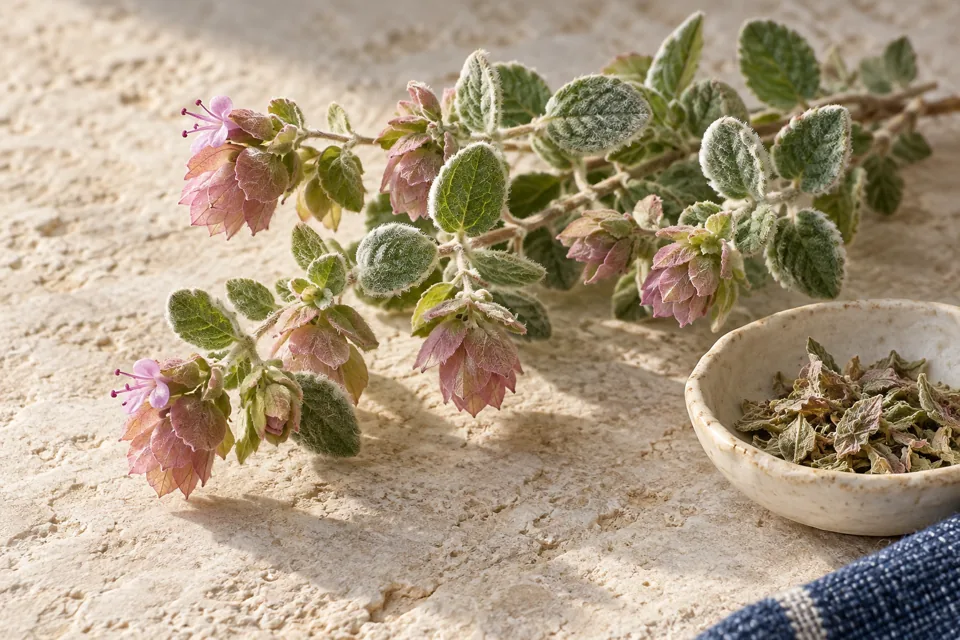
Marjolein · μαντζουράνα
Marjolein · AI illustration
Smaak: Soft spicy, rounder and often flowerier than oregano. Try with: Beans, tomato sauce, vegetable fillings and light stews.
Try marjoram when oregano feels too sharp for you. Start with a small amount and taste again after the sauce has stood.
The popular name does not always say exactly which species is in a bag. In Crete local aromatic relatives are also used; if possible check the botanical name.
14 · HERBS & SPICES
Beans' herb · θρούμπι
Beans herb · AI illustration
Smaak: Sturdy, peppery and related to the smell of thyme and oregano. Try with: Beans, chickpeas and roasted vegetables.
Allow dried bean herb to cook in a legume dish. At first do not add a large amount of oregano: you want to be able to recognize the own aroma.
Not the same as thyme, even though the smells may resemble each other. A simple pan of beans with olive oil is a good basis to taste the difference.
15 · HERBS & SPICES
Diktamos and malotira: the island in a cup
Diktamos · AI illustrationMalotira · AI illustration
Dikitamos (δίκταμο), also called erontas, is connected to Crete and the plant Origanum diktamnus. Malotira (μαλοτήρα) is a Cretan mountain tea, usually Sideritis syriaca. It is not other names for ordinary oregano or black or green tea of the tea plant.
Learn them first as a separate herbal drink. Follow the amount and pull time on the packaged product, smell above the cup and taste without honey. Then add a small amount of honey if necessary: so you notice what the herb contributes.
Prefer to buy a clearly labelled product from cultivation. Do not take plants out of a gorge and consider a popular name as sufficient identification. Stories about a herb are part of the cultural landscape; in this guide we treat the aroma and use, without a medical effect.
16 · HERBS & SPICES
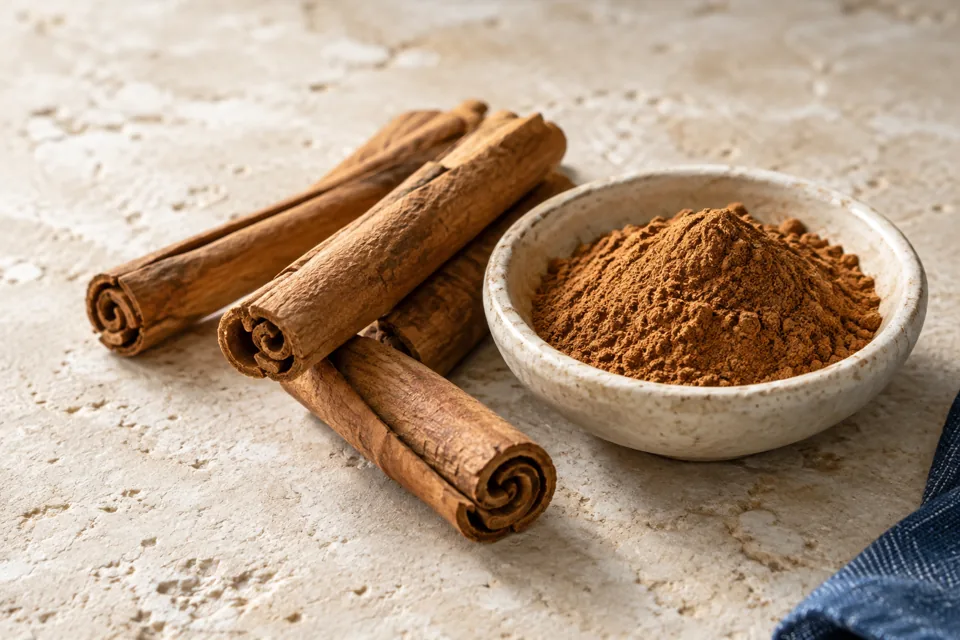
Cinnamon · κανέλα
Cinnamon · AI illustration
Smaak: Warm, woody and sweet-smelling. Try with: Tomato sauce, stew, rice pudding and pastries.
A piece of stick can be pulled along and removed later. Powder immediately spreads and stays in the sauce: start with a small snuff.
A cinnamon accenter can make a savoury sauce smell rounder without making it a sweet dish. Taste next to an unspiced spoon sauce to recognize the difference.
17 · HERBS & SPICES
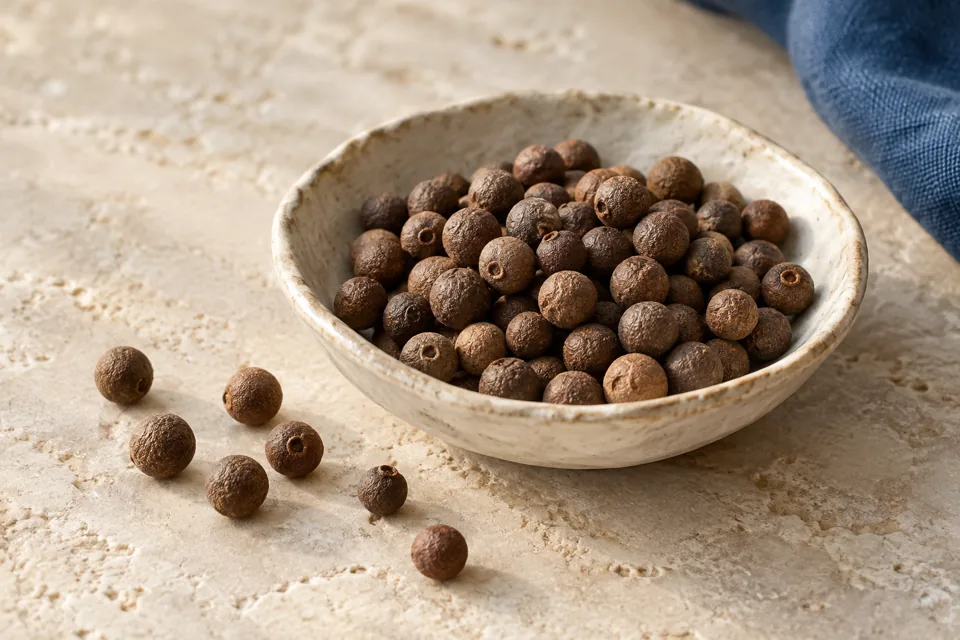
Allspice · μπαχάρι
Piment · AI illustration
Smaak: A warm smell that reminds of several sweet spices. Try with: Stews and broth.
Use a few whole grains in a herbal bump, or a very small amount of ground piment. Remove whole grains before serving.
The English name allspice does not mean that it is a ready-made mixture.
18 · HERBS & SPICES
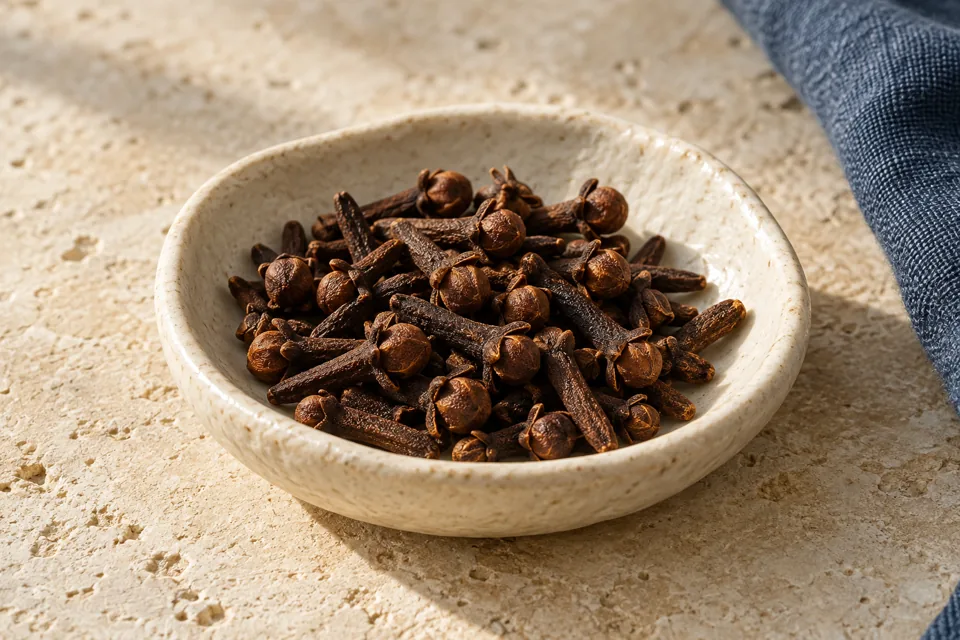
Cloves · γαρίφαλο
Cloves · AI illustration
Smaak: Very intense, warm and exciting. Try with: Syrup, honey cake and a background accent in stew sauce.
Start with one piece in a pan and taste while pulling. Remove is easy when you put the clove in a sieve or herbal slipper.
If you only smell cloves, the balance for a subtle sauce is probably already shifted. Add gradually rather than have to dilute afterwards.
19 · HERBS & SPICES
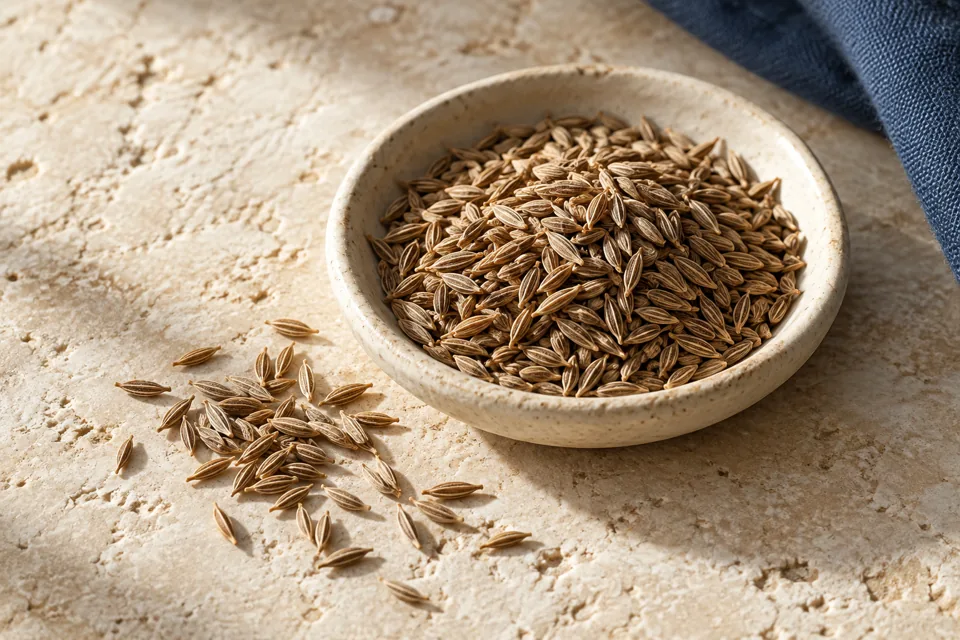
Cumin · κύμινο
Cumin · AI illustration
Smaak: Earthly, warm and clearly savoury. Try with: Soutzoukakia, legumes and tomato sauce.
Let a small amount of ground cumin come briefly into a damp or slightly oiled base, without letting it get dark. Then add the rest of the dish.
Do not confuse with caraway. For a first own trial, a small snuff works in a spoonful of warm chickpeas; you don't have to season an entire pan.
20 · HERBS & SPICES
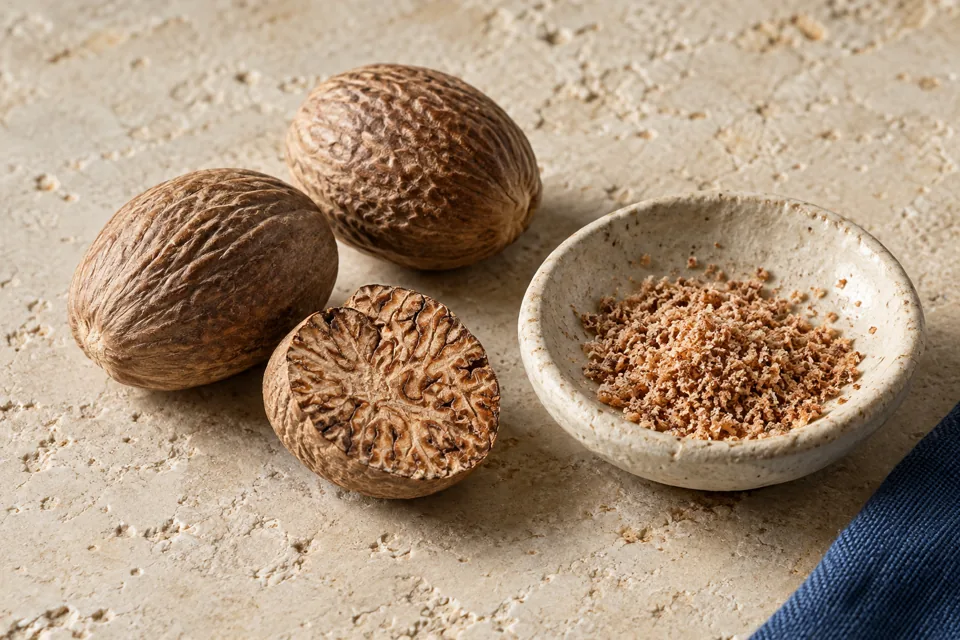
Nutmeg · μοσχοκάρυδο
Nutmeg · AI illustration
Smaak: Warm, round and powerful. Try with: Béchamel, mashed potatoes and soft vegetable fillings.
Grate a little bit over a spoon of sauce, mix and taste. Fresh rasp is easy to dose, but an unobtrusive looking bit can already give a lot of smell.
Use it as a background for a creamy sauce. Do not combine large amounts of cinnamon, piment and nutmeg from the start; you will lose sight of their individual contribution.
21 · HERBS & SPICES
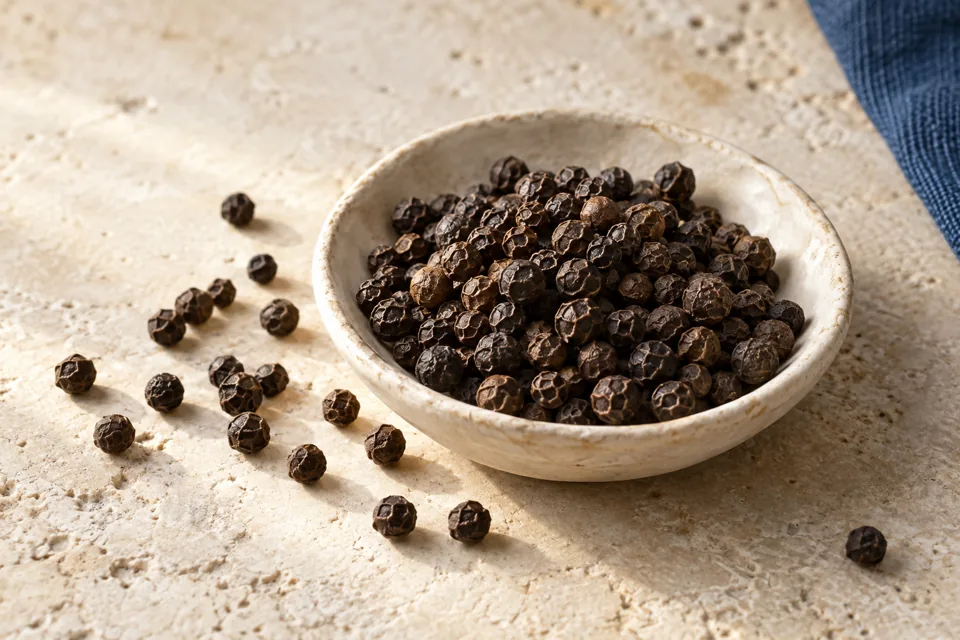
Black pepper · μαύρο πιπέρι
Black pepper · AI illustration
Smaak: Prickly, spicy and aromatic. Try with: Almost every savoury preparation, especially as a finish.
Mix just before use if you think the fresh smell is important.Taste soup or sauce after adding again: Sharpness is only part of what pepper does.
Paprika and black pepper come from different plants. In Greek can πιπέρι refer to a pepper product in a composition; read the full name.
22 · HERBS & SPICES
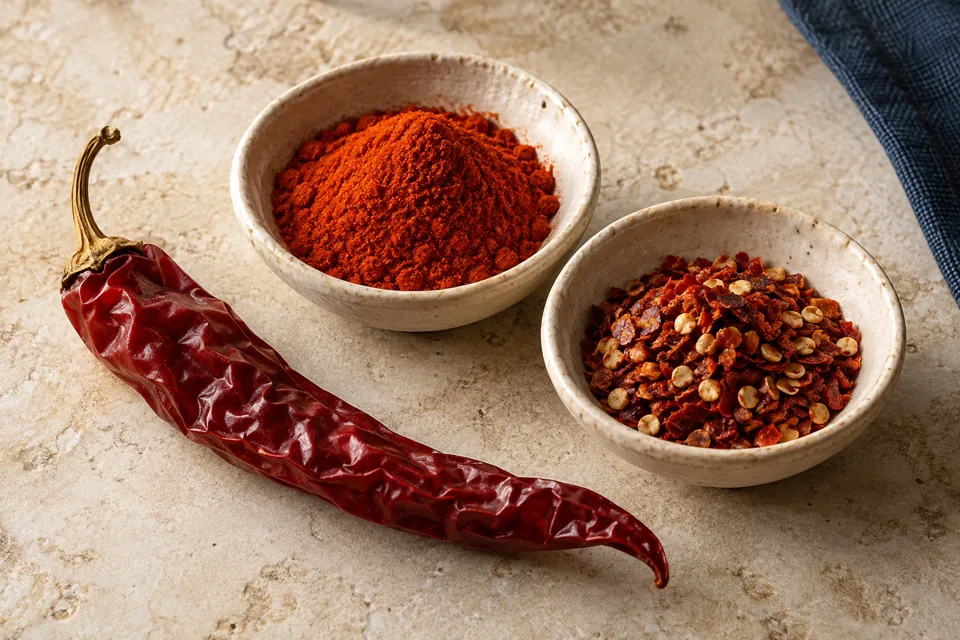
Paprika and boukovo · πάπρικα · μπούκοβο
Paprika & boukovo · AI illustration
Smaak: From mild and fruity to hot; smoked gives an extra smoke tone. Try with: Beans, oven vegetables, sausage dishes and table finishes.
Check the product γλυκιά (sweet/mild), καυτερή (hot) or καπνιστή Boukovo consists of pepperflakes; the sharpness varies by product.
Do not leave paprika powder on a dry, very hot pan bottom for long. Mix it through the base and add moisture in time to avoid a burnt taste.
23 · HERBS & SPICES
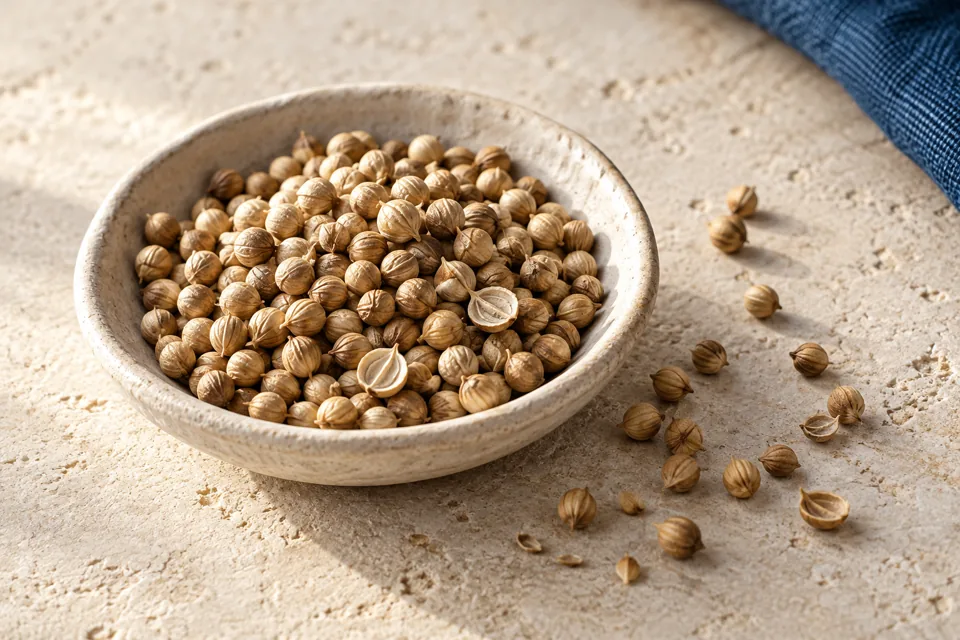
Coriander seed · κόλιανδρος
Coriander seed · AI illustration
Smaak: Warm, slightly citrus-like; different from the fresh leaves. Try with: Potatoes, vegetables and marinades.
Smear a few seeds for a clearer aroma. You can heat whole seeds briefly in a dry pan until they smell; let them not smoke or discolour darkly.
The leaf with the same plant name is not an equivalent substitute for the seed. Buy for a recipe that requires seed not a bunch of green coriander as a direct replacement.
24 · HERBS & SPICES
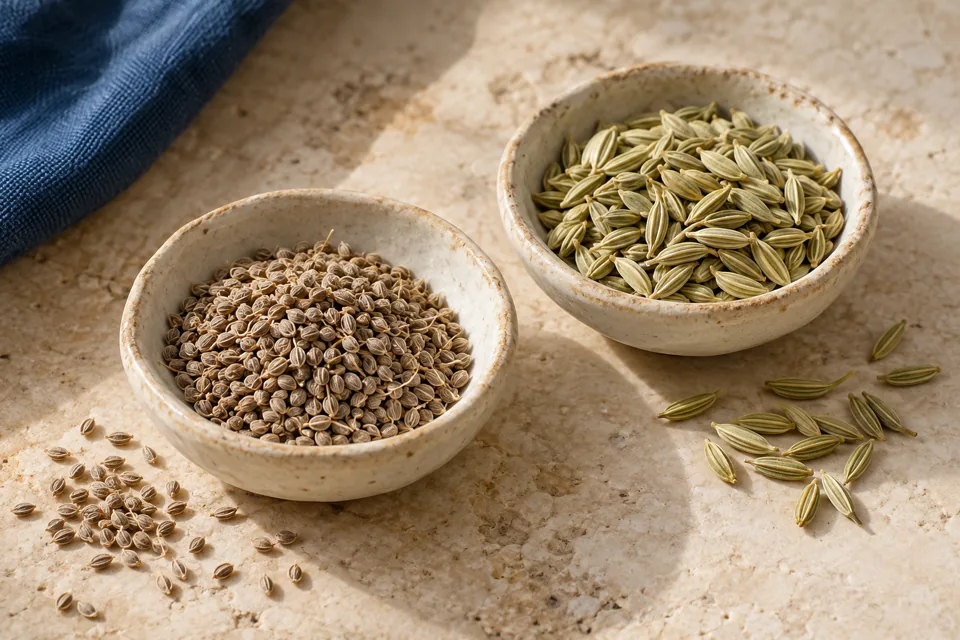
Anise and fennel seed · γλυκάνισος · μαραθόσπορος
Anise & fennel seed · AI illustration
Smaak: Both anisy, but with its own smell and sweet impression. Try with: Bread, biscuits and small accents in savoury preparations.
Smell a little bit and smell both side by side. Do not use them without tasting in the same quantity: the intensity and the desired character differ.
Anise is associated with ouzo; that does not make every Greek spirit drink anisy. Cretan tsikoudia usually has no anisy aroma.
25 · HERBS & SPICES
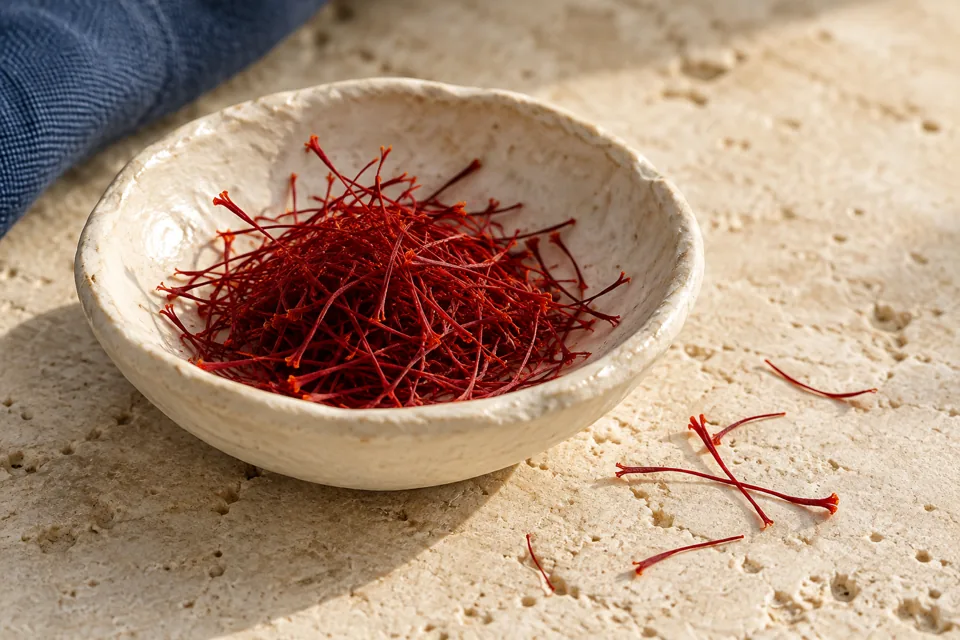
Saffron from Kozani · κρόκος Κοζάνης
Saffron · AI illustration
Smaak: It has its own dry-flowered aroma and a yellow colour. Try with: Rice, broth and fish dishes.
Allow a small amount of threads to be drawn in some hot cooking liquid and add that moisture to the dish. For a first dish, follow a recipe with a clear amount.
Buy wires with provenance information. Yellow coloured powder is not automatically saffron; colour and aroma are two different properties.
26 · HERBS & SPICES
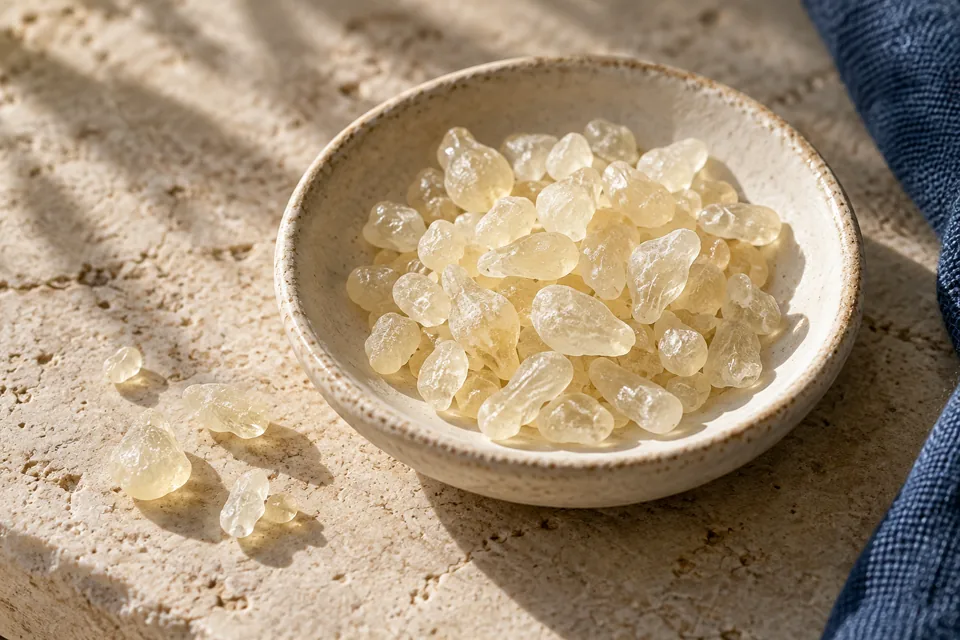
Chios mastic · μαστίχα
Mastic · AI illustration
Smaak: Resinful, fresh and very recognizable. Try with: Sweet bread, cream desserts and ice cream.
For culinary use, take edible mastic. Small resin grains are made more easily with a little sugar; include that sugar in your recipe.
It is resin and therefore botanical not seed or leaf. Begin very modestly: a pleasant fresh accent can dominate with too much.
27 · HERBS & SPICES
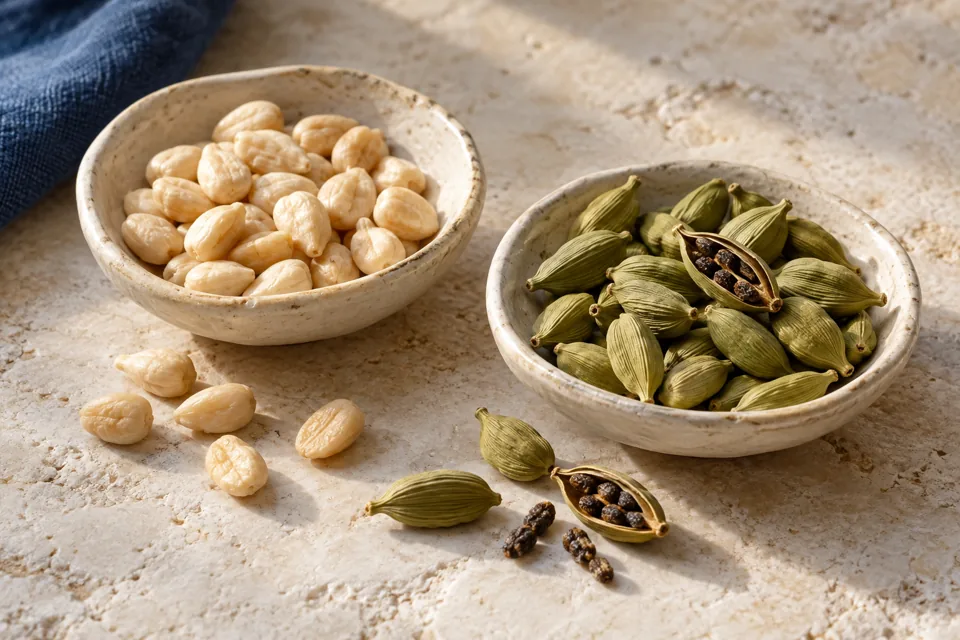
Mahlepi and cardamom · μαχλέπι · κάρδαμο
Mahlepi & cardemom · AI illustration
Smaak: Mahlepi: spicy and almond. Cardamom: fresh-spiced. Try with: Tsoureki and other fragrant sweet sword, depending on the recipe.
Use a recipe as a dosage basis. Ground spices have a different intensity as they are older; adding extra is not always a solution for a finished pot.
Buy mahlepi as a culinary product. grinding all kinds of fruit seeds is not an equivalent way to replace a missing spice.
28 · HERBS & SPICES
From dish to herbal combination
Start with the main raw material and choose one identifiable direction. The combinations below are own starting points for cooking, no fixed recipe rules. Leave a herb if you don't like it; do not automatically replace it with an equal amount of something stronger.
Court or basis
Start-up combination
When to Add
Tomato and feta
Oregano + olive oil; possibly black pepper
Oregano just before serving, then let it stand
Lemon potatoes
Oregano or thyme + lemon
Herbs when baking; fresh lemon accent after tasting
Yoghurtdip
Dill or mint + garlic
Leave to rest after mixing; retest
Courgette cookies
Coin + parsley
By filling before baking
Vegetables
Dill + parsley; possible fennel green
Through a leaked, cooled filling
White beans
Laurel + parsley
Laurel during yarn, parsley partly at the end
Tomato stew
Laurel + small cinnamon accent
Slowly pull; remove whole spices
Soutzoukakia
Cumin + garlic
Coat by the chopped according to your recipe
Fried mushrooms
Rosemary + a little vinegar
Bag during baking; vinegar dosed at the end
Béchamel
A small rasp nutmeg
Through the warm sauce, then taste again
Yogurt with fruit
Small cinnamon accent or a little cardamom
Distribute over a small trial portion
29 · HERBS & SPICES
Fresh or dried: choose function
Fresh herbs also bring moisture, colour and leaf structure. Dried herbs give a different smell impression and are usually more compact to dose. Replacing a fresh bunch of mint with a full hand dried coin does not yield the same dish.
For your own trial you can start with about one part dried on three parts of finely chopped fresh herb, measured by volume. That is at most a starting point: type, drying and old age make a big difference. If strong herbs prefer to start even lower. Taste after the dried herb has had time to absorb moisture.
For oregano or thyme dried can be exactly the desired direction. For a salad that revolves around a generous amount of fresh parsley, dried parsley is much less suitable to achieve the same effect. Ask not only how much to replace, but also what role the herb has.
30 · HERBS & SPICES
Add, bump and heat
Build aroma in layers. A bay leaf can drag in a stew. A branch of rosemary can give off its scent during baking. A little fresh dill often works better at the end. These are working methods: follow the intended preparation and test on the way with a full recipe.
Smell whole seed only when you need it. Short heating in a dry pan can make the smell clearer; stop as soon as it smells pleasant. Ground spices burn faster. Lower the heat and make sure you have the following ingredients ready, so you can complete the pan in time.
Fat and water give a different impression of the same herb. Therefore, don't just taste dry from a jar. Mix a little bit with the base you're going to eat: yogurt for a dip, warm sauce for a stew or oil on a piece of bread. Cut fresh herbs with a sharp knife and dry washed leaf well before processing it.
31 · HERBS & SPICES
Dosing and repair: first a test spoon
Create a spoon of your dish separately and add a little bit of herb to it. So you can judge whether the taste is right without changing the whole pan immediately. Like it, then season the pan step by step and taste again after everything is mixed.
For four servings, you can start with half a teaspoon of dried oregano or a few tablespoons of finely-cut soft herb at your own simple vegetable dish. This is a test quantity, not a universal recipe size. Cinnamon, piment, clove, mastic and nutmeg require a much more reserved start.
Too much seasoning? Remove whole spices and twigs. If necessary, increase the unspiced base: extra tomato, beans or yogurt, appropriate to the dish. Lemon and sugar do not remove a spice; they only change the balance. If something is really burnt, then more herb does not usually help. Try a new, small base and mix only if the taste remains pleasant.
32 · HERBS & SPICES
Three small tastings for home
1. Oregano versus thyme. Divide a boiled potato over three bowls. Give each a similar amount of olive oil. Leave one portion of natural and add a small pinch of oregano and thyme to the other two respectively. First taste without lemon, then with a few drops. Note which aroma you will continue to recognize for longer.
2. Mint versus dill. Divide natural yogurt over three bowls. Mix a little finely cut mint by one and dill by another. Don't add garlic yet: it makes it harder to get to know the difference. Taste immediately and again after ten minutes.
3. Heat without sweets. Heat a simple tomato sauce and put a few spoons aside. Give one a small cinnamon accent, a second a little cumin and leave a third natural. Compare smell, aftertaste and feeling of roundness. You don't have to choose which one is most Greek; explore which version suits your meal.
33 · HERBS & SPICES
Buy, store and useable stock
Buy small quantities that you actually use. Look at packaging, ingredients and origin; a bag with a Cretan landscape on the front does not automatically tell where the herb grew. In a mixture you also want to know whether salt, chili or other ingredients have been added.
Keep dried herbs and spices tightly closed, dry and dark, away from the stove. Do not shake directly above a steaming pan: first scoop a little in a dry spoon. Write the opening date on the jar and smell arranged. A weak aroma is a reason to buy a smaller fresh jar, not to add endlessly more old powder.
Keep fresh herbs clean and appropriately chilled; avoid a wet compressed bush. Soft herbs can be finely cut and frozen in small portions for hot dishes. The structure after thawing is different, so don't count on the same fresh leaves for a salad.
A first supply can consist of oregano, thyme, bay leaf, black pepper, cinnamon and cumin, supplemented with fresh parsley, dill or mint to your weekly menu. Then build out. A small collection you know is more convenient than twenty open jars that you rarely use.
34 · HERBS & SPICES
Six confusions to remember
Confusion
Which helps to choose
μπαχάρι versus μπαχαρικά
Cans of pepper μπαχάρι name; μπαχαρικά is the general word for spices.
Cumin versus caraway
Other spices with different flavouring derivatives; check κύμινο For cumin.
Mint versus peppermint
δυόσμος usually refers to crubmint; peppermint can taste much cooler.
Fennel green versus seed
The leaf gives green and volume, the seed a more compact aroma.
Oregano versus marjolein
Related, but no identical smell or fixed one-on-one replacement.
Boukovo versus smoked peppers
Flakes are not automatically smoked and may be mild or hot.
35 · HERBS & SPICES
Greek words for the market and the menu
The following writing methods help you to read a label or ask a short question. A seller can tell you what he offers and how he uses it himself. In the case of an unknown mixture, ask about the ingredients.
Greek
Dutch
φρέσκα μυρωδικά
Fresh aromatic herbs
αποξηραμένα βότανα
Dried herbs
μπαχαρικά
Spices
χωρίς αλάτι
Without salt
Είναι καυτερό;
Is it hot/spicy?
Περιέχει αλάτι;
Is there salt in it?
Τι περιέχει αυτό το μείγμα;
What's in this mixture?
Είναι από την Κρήτη;
Is it from Crete?
36 · HERBS & SPICES
Sources and further cooking
The sources below underpin the regional context and some specific applications. Taste descriptions, test assignments, dosing advice and combination table are their own culinary explanation. The test quantities are starting points to adapt themselves.
60 plant and animal portraits, eight habitats and 44 in-depth chapters, from olive tree and oleander to lamb vulture, sea turtle and small life between the stones.