GASTRONOMY · INGREDIENTS & SAUZEN
Trachanas and xinochondros: grain with character
Dried grain with dairy, sour and mild variants, soup binding and the Cretan xinochondros.
Added: · approx. 2 minutes read
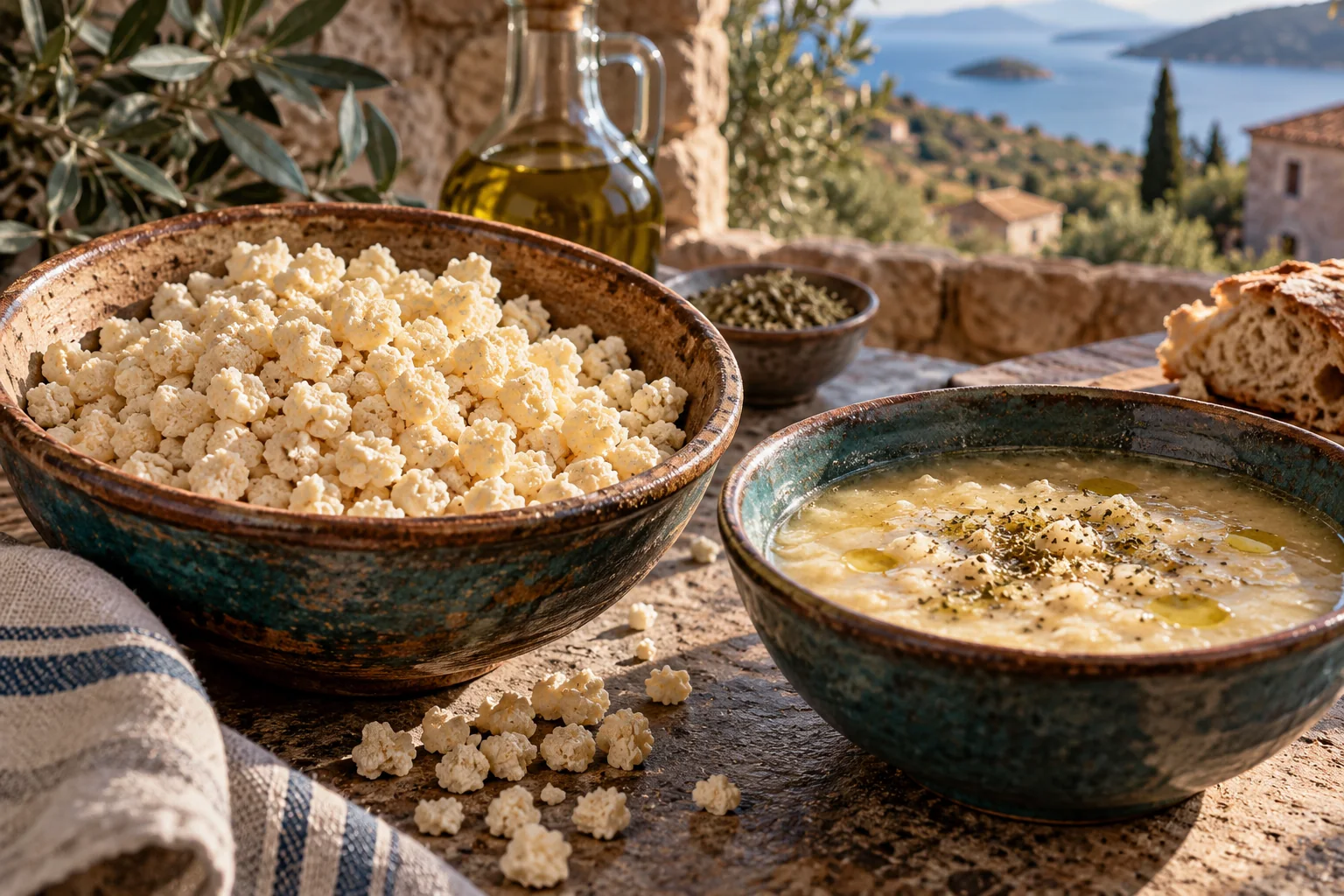
1. Grain which does more than fill
Trachanas is a family of dried cereal products, often prepared with milk or fermented dairy. The composition and grain vary by region and producer. On Crete you will encounter the related xinochondros. For example, the official regional recipe collection shows how it is used in a simple tomato soup. [I05]
With this trachanas is not easy Greek couscous. The taste can be milky or sour and the product can bind moisture during cooking. The coarse grain and the extent to which it disintegrates also affect the final dish.
2. Read the package first
Check that the product contains wheat, milk, egg or other ingredients. Traditionally looking dried grains are not automatically vegan or gluten-free. Sweet and sour variants also refer to a style; they do not say that you buy ready-made dessert or a very sour soup.
Look at the cooking advice from your packaging. Fine grains can react differently than coarse pieces. Start with plenty of liquid and keep some hot water behind your hand, so you can adjust quietly without always interrupting the cooking completely.
3. Getting to know binding
Stir regularly along the bottom, especially when the mixture thickens. Taste if the grain is cooked instead of just looking at the clock. A soup can become even more stiff after taking it off. Please note this before you let it boil unnecessarily far.
For a first acquaintance a simple soup works better than a dish with many strong additions. Pay attention to the grain's own taste and add cheese to the table. So you know how much salt and acid are already in the base product.
4. Store without folklore
Keep the dry product dry and tightly closed according to the package. After cooking, follow the rules for perishable residues: quickly cool and store refrigerated. A product that was previously dried at the end of the summer is not automatically safe to ferment or dry at home. [I06]
Use this chapter to understand a purchased product. Self-making requires a reliable working method and control of the process; the romantic image of a village supply cabinet is not a substitute for that knowledge.
Sources and accountability
Consulted on 31 October 2026. Facts about origin and products are linked to these sources. Explanation, comparisons and trial suggestions are written editorially; recipe texts are not reproduced.