GASTRONOMY · INGREDIENTS & SAUZEN
Saltsa domata: the Greek tomato sauce as a base
Build a tomato base for various dishes: onion, moisture, herbs, cooking and finishing.
Added: · approx. 2 minutes read
1. A basis, no national recipe
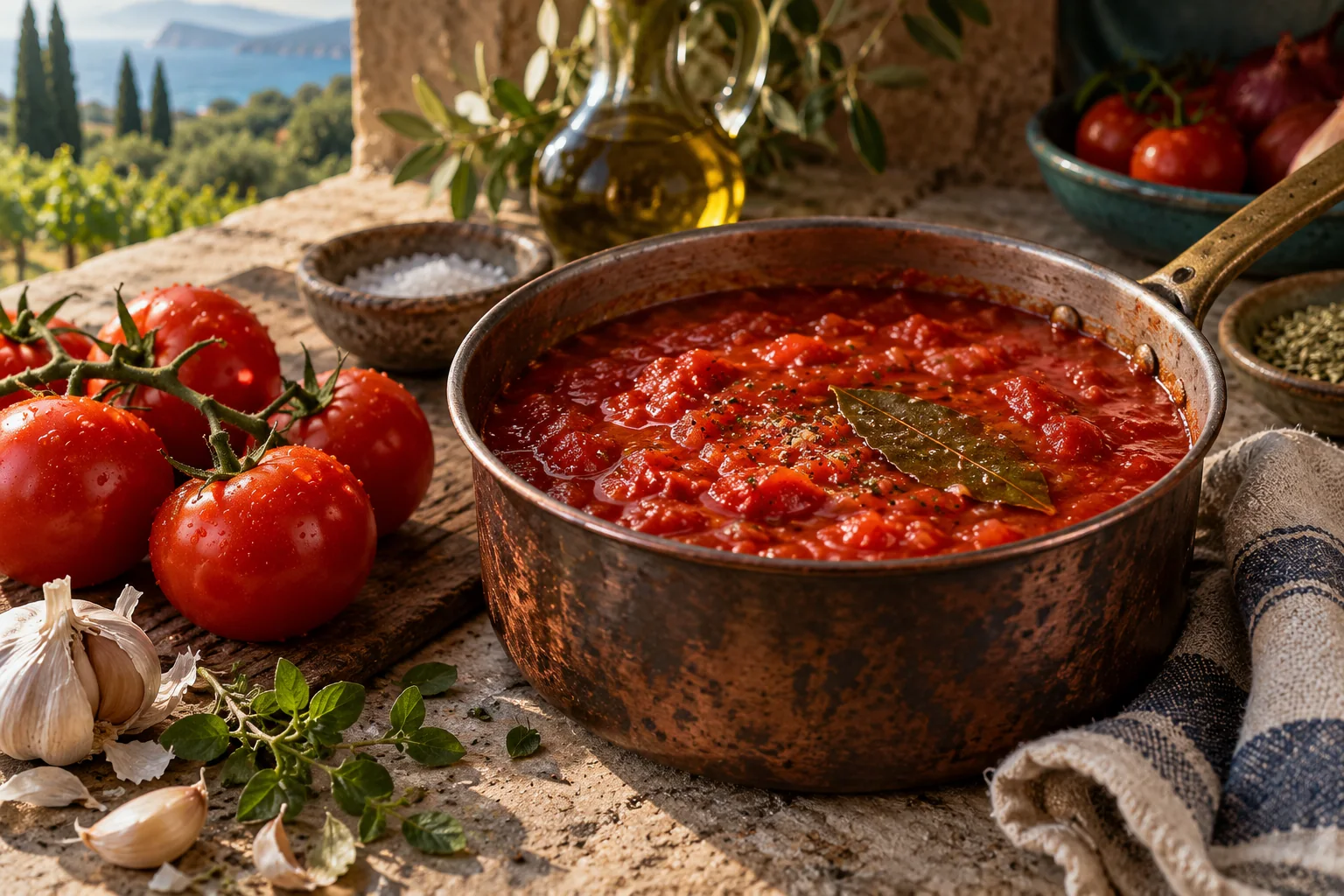
Saltsa domata is a useful name for tomato sauce. The exact wording follows the dish: a sauce with legumes does not have to taste the same as that with meatballs, fish or pasta. It makes more sense to learn to understand a few choices than to record one version for the whole of Greece.
Tomatoes have a clear place in different regional cuisine; on Santorini the municipal gastronomy guide calls them a characteristic product. [I01] That doesn't say anything about the origin of a random look in your closet. Fresh ripe tomato, passata and tomato pieces are different starting points.
2. The onion and the moisture
Let onion quietly soften before tomato is added. Strong brown baking gives a different result than making it glassy. Choose consciously and prevent pieces of garlic from burning while the onion still has to yarn.
Consider how much water the final dish brings. Courgette and fresh tomato can give a lot of moisture; a sauce for a dry side dish can just stay a little more spacious. Cooking is a means, not a match for the thickest pan.
3. Herbs intended for human consumption
Oregano, bay leaf, cinnamon and parsley can fit any one, but not necessarily at the same time. Choose from the court. A little cinnamon can work nicely in a certain stew preparation and when fresh fish finishes are unnecessarily dominant.
Try before you try to correct acid with sugar. Sometimes the sauce needs longer yarn, which should be diluted or better salted. Sweetness is a choice of taste and not a universal repair tool. Add fresh herbs if desired later when you want to keep their fresh smell.
4. Finish and boil
Take a bite with the side dish. Pasta, bread, cheese or legumes change the balance of the loose sauce. Keep a part of the sauce apart when you want to make multiple applications; you can finish one base in focus later.
Cool a remaining batch quickly in small, shallow trays and store refrigerated according to food safety advice. [I17] Putting a hot sauce in any pot does not automatically make it suitable for uncooled storage. Home-making requires a tried and tested process. This chapter teaches how to build sauce, not preserve it by feeling.
Sources and accountability
Consulted on 31 October 2026. Facts about origin and products are linked to these sources. Explanation, comparisons and trial suggestions are written editorially; recipe texts are not reproduced.