GASTRONOMY · INGREDIENTS & SAUZEN
Chios Mastic: cooking with a fragrant resin
The fragrant resin of Chios: heritage, product shapes, careful dosing and applications in the kitchen.
Added: · approx. 2 minutes read
1. The resin and the island
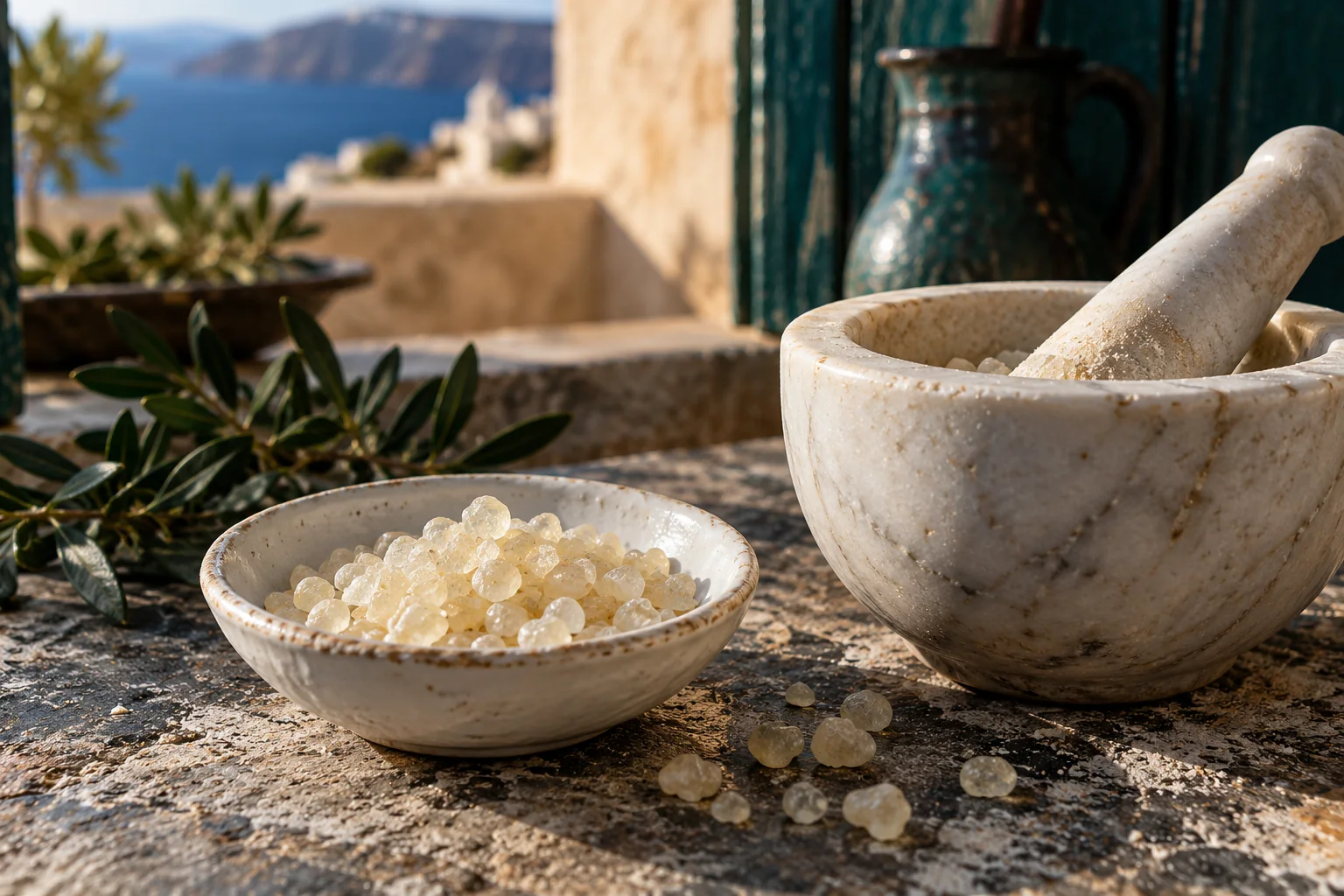
Mastic or mastiha is a fragrant resin that is strongly connected to Chios. The knowledge about cultivation and extraction on the island has been established since 2014 on the UNESCO list of intangible cultural heritage. This concerns expertise and community practices, not a general statement of quality for each product with the word mastiha. [I04]
In a delicatessen shop you can find resin grains, ground mixtures, sweets and liqueurs. They're culinary not interchangeable. For example, a bottle of mastiha liqueur also brings sugar and alcohol. For a dish without alcohol you use a suitable culinary resin product.
2. Small dosing
The smell can dominate quickly. Start with a small amount according to a reliable prescription or the manufacturer's instructions. The goal is a recognizable accent that leaves room for the other ingredients. More can be added later; too strong a resin flavour is difficult to extract from a ready dish.
Resin grains can become sticky when grinding. For a sweet preparation you can rub them with a little of the sugar from the recipe. Weigh that sugar in total. Do not use resin that is only sold for incense, cosmetics or any other non-culinary application.
3. What does it fit in with?
Milky desserts, bread and cake can give an interesting background. First taste a simple base before mixing rosewater, vanilla and citrus. With a lot of strong smells at the same time, it's hard to judge which ingredient you actually appreciate.
A small kitchen test is to divide a finished, suitable milk or yogurt preparation into two portions. Apply only one portion carefully to taste and compare. This is a tasting suggestion, not a traditional recipe.
4. Origin and expectations
When purchasing, ask which product you get and what it is intended for. A package with a Greek island does not in itself prove a protected origin. Keep tightly sealed according to the label, so that you keep both the smell and the product quality as well as possible.
This chapter uses mastic as a tastemaker. Traditional use and heritage status are not evidence that desserts have a medical effect. For the kitchen, the most important question is easier: how much do you need to achieve a pleasant, recognizable smell?
Sources and accountability
Consulted on 31 October 2026. Facts about origin and products are linked to these sources. Explanation, comparisons and trial suggestions are written editorially; recipe texts are not reproduced.