GASTRONOMY · INGREDIENTS & SAUZEN
Chickpeas: from dry grain to pantry
Choosing dry or cooked chickpeas, judging and using them in soup, salad and stock dishes.
Added: · approx. 2 minutes read
1. A grain with multiple destinations
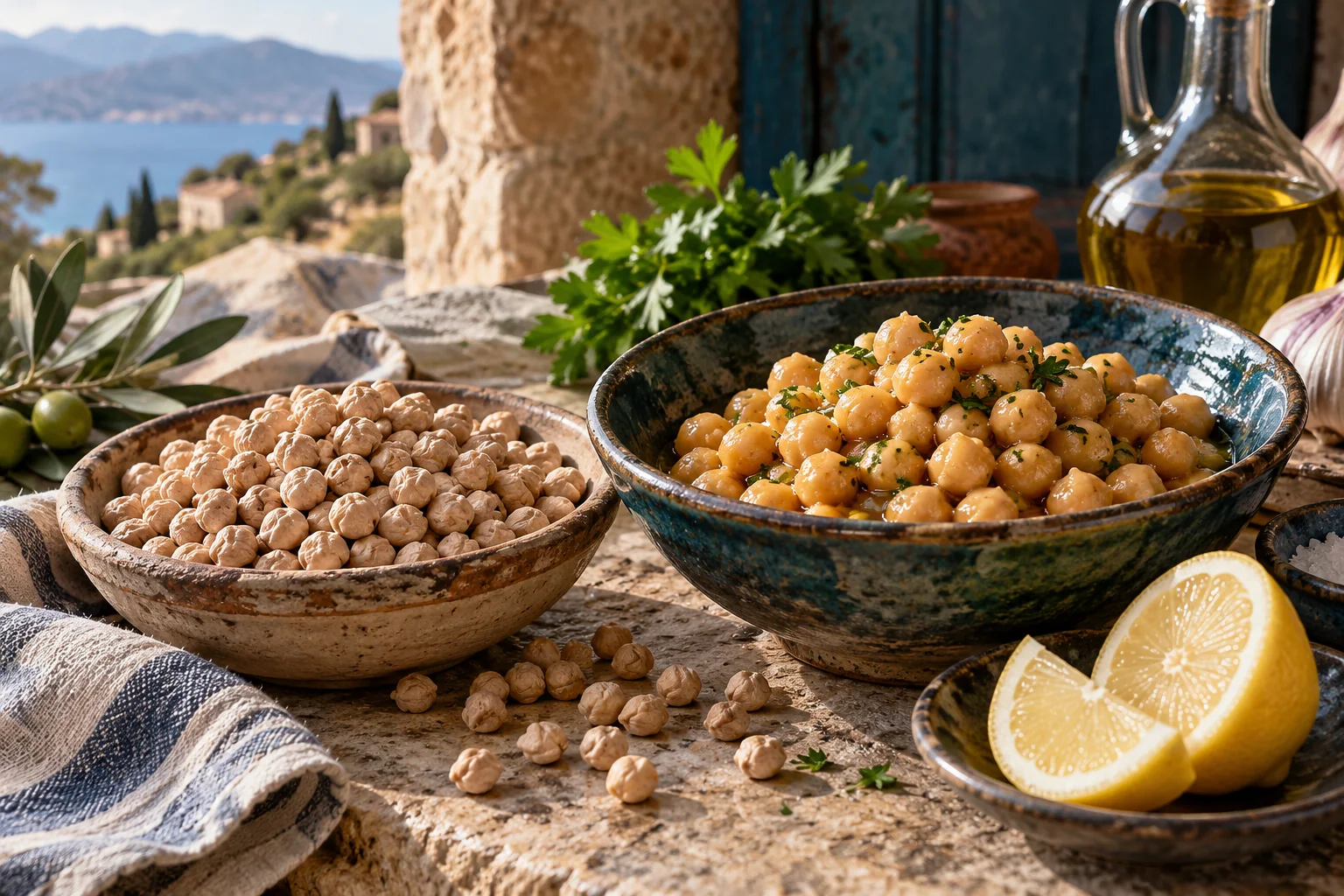
Chickpeas, revithia, may end up in soup, oven pot and salad. The Peloponnese culinary guide calls chickpeas as part of the local legumes world. [I03] For the home chef, the choice usually starts with dry or already cooked.
A pot or can offers convenience and a predictable starting point. Dry chickpeas give more influence on cooking and pastries. Neither makes a dish more authentic in itself. The way you treat and taste the product determines a lot of the result.
2. Weeks and cookies
For dry chickpeas, follow the package's advice and soak refrigerated when circumstances require; do not put them away for long periods of time. Pour, rinse and cook according to product advice completely cooked. A grain may look soft on the outside while the middle is grainy.
For a cooking test, remove several grains from the pan. Old and new stocks can react differently. It helps not to constantly add new dry grains to a half-baked batch. Prefer to keep a clear portion with a known starting point.
3. Boil moisture and structure
For a soup some starchy cooking liquid is welcome; for a salad you often want the grains to leak well. Rinsing after cooking is therefore not an automatic step for each dish. First, think about what to do with the moisture in your preparation.
Canned chickpeas can already contain salt. Taste them after pouring and adjust the dressing accordingly. For a smooth mashed potatoes a really soft grain helps more than just spin longer in a kitchen machine. Extra oil can't hide a hard core.
4. Stock for a next meal
Divide a boiled batch over small, shallow bowls and cool quickly. Don't leave a large hot pan on the counter for hours. The general food safety rules for cooked residues continue to apply. [I17]
Make the rest a simple salad with tomato, onion, parsley, olive oil and lemon. Add the acid in parts and taste with a grain. Keep the herbs quiet for the first time: this way you get to know the product and build up a stock dish that you can vary in focus later.
Sources and accountability
Consulted on 31 October 2026. Facts about origin and products are linked to these sources. Explanation, comparisons and trial suggestions are written editorially; recipe texts are not reproduced.