GASTRONOMY · INGREDIENTS & SAUZEN
Sesame and tahin: roasting, stirring and tasting
Choosing, roasting and stirring sesame seeds and sesame paste, with attention to taste and allergens.
Added: · approx. 2 minutes read
1. Seed and pasta are different tools
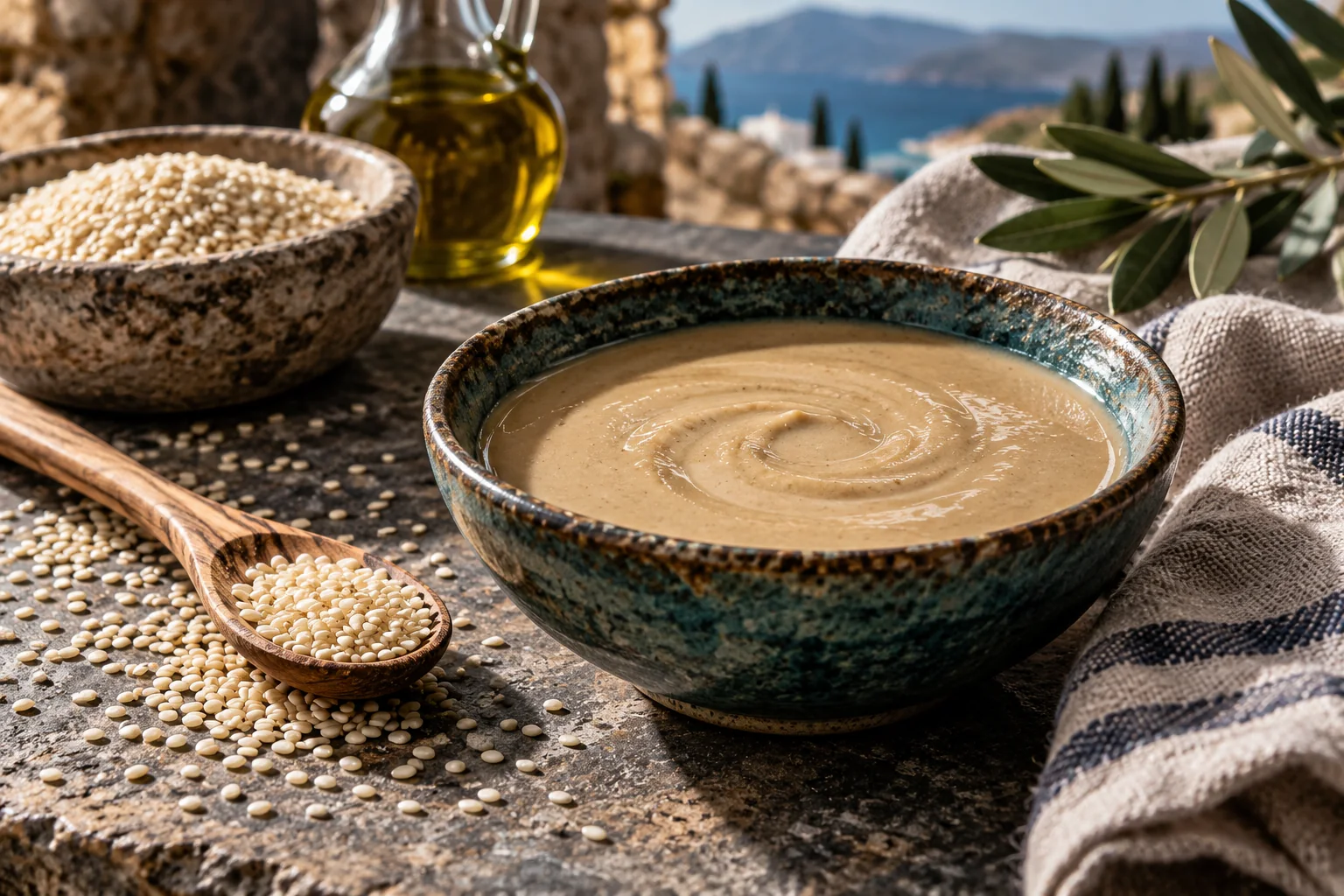
Sesame gives a dish grains and a roasted smell; tahin is a pasta that can also give structure and binding. Tahin belongs among other things to the Greek shopping and breakfast world. The official city guide of Athens mentions it in addition to honey in its overview of local products. [I09]
Be careful whether you buy pure sesame paste or a sweetened compound product. Also roasted and less roasted variants can taste different. A darker pasta is not automatically better for each sauce. For a soft dressing, a mild kind can be more pleasant.
2. Why there's oil on top
In some pots oil separates during storage. Stir a suitable, still good pot carefully before you weigh. Otherwise you use oil one time, and next time a dry mass at the bottom. That makes the same amount on paper unpredictable.
Use a clean, dry spoon and follow the manufacturer's instructions for storage. A smell you don't trust won't solve with extra lemon or garlic. Check the raw material before making a whole bowl of sauce with it.
3. Griding and tasting
Heat loose sesame gently in a dry pan when you want a roasted touch. Stay with it and stir: small seeds can quickly become too dark. Remove them from the hot pan as soon as the desired point is reached, because the pan holds heat.
Compare a little untoasted and roasted seed on the same piece of bread with yogurt. That test shows what heat adds. Do not assume that you achieve exactly the same effect by adding more tahin to a dish; quantity and roasting are separate choices.
4. At dinner and in allergens
Tahin can be stirred with honey on bread, but also with water and lemon into a savoury sauce. Sesame is an allergen. A vegetable sauce is therefore not automatically suitable for every guest. Ask for allergies and avoid cross-contact with spoons and work equipment.
For the emulsion and the curious phase in which the pasta first thickens, there is a separate chapter on tahin lemon sauce. Here remains the starting point product knowledge: choose an understandable label, stir well and taste before dosing.
Sources and accountability
Consulted on 31 October 2026. Facts about origin and products are linked to these sources. Explanation, comparisons and trial suggestions are written editorially; recipe texts are not reproduced.