CONNECT · DISCOVER · MAKE IT YOURS

From καλημέρα to a conversation

Eight learning steps with sixteen exercises, links to our extensive lessons and repetition on your own device.

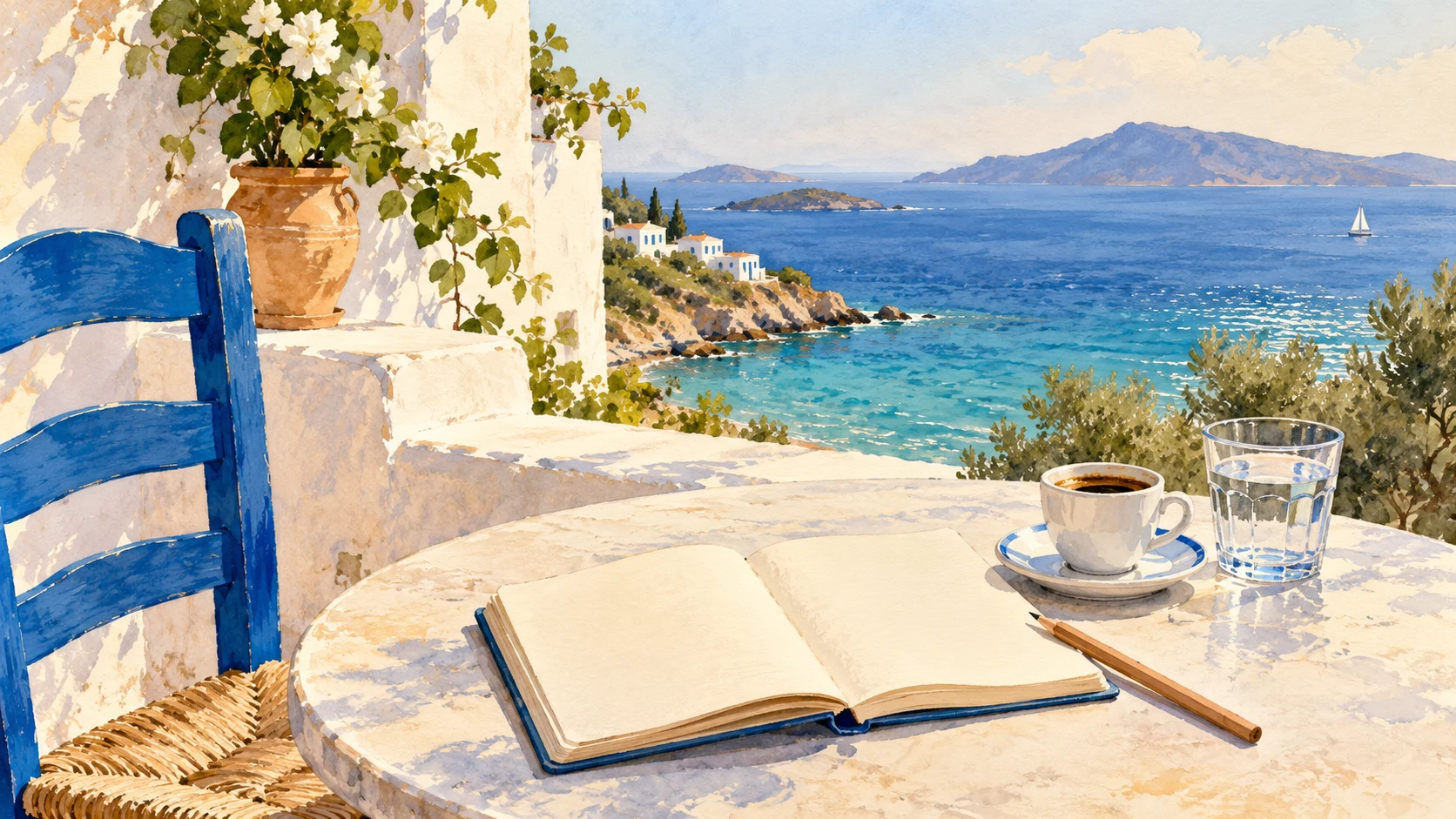
Painted atmospheric illustration at Van καλημέρα to a conversation
AI illustration from our magazine collection · artistic impression, no exact location or product view.

A little bit, more often back

Work in short sessions. Read the two model sentences, pronounce them aloud, cover the translation and try to understand them again. Then make the two questions. You can open each step; an earlier step is not an access requirement.

Two good answers save the step as practiced. Three days later, it appears again at the repeat selection. That interval is a simple practice appointment, not a personal language diagnosis. An error response is immediately explained and you may try again.

Eight steps to build on

The progress remains in this browser on this device. Without available browser storage, you can do the exercises, but your progress will not be saved. The existing learning route overview will also remain available.

1 · Greetings and polite beginnings

Doel: You greet someone and thank you for your help.

GreekDutch
ΚαλημέραGood morning.
ΕυχαριστώThank you / Thank you

Learn the words first as a whole sound group. Note the accent and then read the letters separately.

Continue reading and practice →
Which means... Καλημέρα;

You want to thank me.

2 · Introducing yourself

Doel: You say your name and you ask what someone's name is.

GreekDutch
Με λένε…My name is...
Πώς σας λένε;What's your name?

Replace the dots with your own name and practice the question and the answer together.

Continue reading and practice →
What do you do with my name?

What do you ask with Πώς σας λένε;

3 · Order something

Doel: You politely ask for one simple order.

GreekDutch
Θα ήθελα…I'd like to...
Νερό, παρακαλώ.Water, please.

Start with one drink or dish. Expand only when you recognize the words.

Continue reading and practice →
Which opening fits I'd like to...?

What do you ask with Νερό, παρακαλώ;

4 · Identifying numbers

Doel: You recognize one, two and three in a simple context.

GreekDutch
ένα · δύο · τρίαOne · two · three
Πόσο κάνει;How much is it?

Numbers can change shape with the noun. Use the number guide for that extension.

Continue reading and practice →
Which means... δύο;

What question is about the price?

5 · Find a place

Doel: You ask where something is and you recognize it on the left or right.

GreekDutch
Πού είναι…;Where's...?
αριστερά · δεξιάleft · right

Draw a simple intersection and say the appropriate word with each arrow.

Continue reading and practice →
Which means... δεξιά;

Which question does Where is...?

6 · Restore the conversation

Doel: You ask for repetition when you don't understand something.

GreekDutch
Δεν καταλαβαίνω.I don't understand.
Πιο αργά, παρακαλώ.Slow down, please.

A sense of recovery is as valuable as the first question.

Continue reading and practice →
You don't understand.

What do you ask with Πιο αργά, παρακαλώ;

7 · A small village conversation

Doel: You ask for something that you see and ask permission.

GreekDutch
Τι είναι αυτό;What is this?
Μπορώ να βγάλω μια φωτογραφία;Can I take a picture?

Just point out something if it's appropriate, let the other answer before you ask the next question.

Continue reading and practice →
Which means... Τι είναι αυτό;

You want to take a picture.

8 · Three steps in one conversation

Doel: You connect greetings, a question and a sense of recovery.

GreekDutch
Καλημέρα. Πού είναι η παραλία;Good morning, where is the beach?
Μπορείτε να το γράψετε;Can you write it down?

Practice with a travel companion, change the destination and let the other consciously give an unexpected answer.

Continue reading and practice →
What do you ask with Μπορείτε να το γράψετε;

What's a useful reaction if you don't understand the answer?

From recognizing to saying self

Multi-choice questions mainly practice recognition. Then test actively: cover the Greek and formulate the sentence yourself, or ask a traveler to give a different response. Change polite greetings, a concrete question and a sense of recovery.

The grammar, pronunciation and conversation pages are further deepening. No real pronunciation recordings are added for this learning path.

Grammar · My existing learning pathway · Conversational skills

Sources & edition

Editorial edition · 21 October 2026. Commands, menu guides and selection aids are their own effects. For practical data, please refer to the mentioned administrators; check current access and facilities before your visit.
    View all twelve new parts →