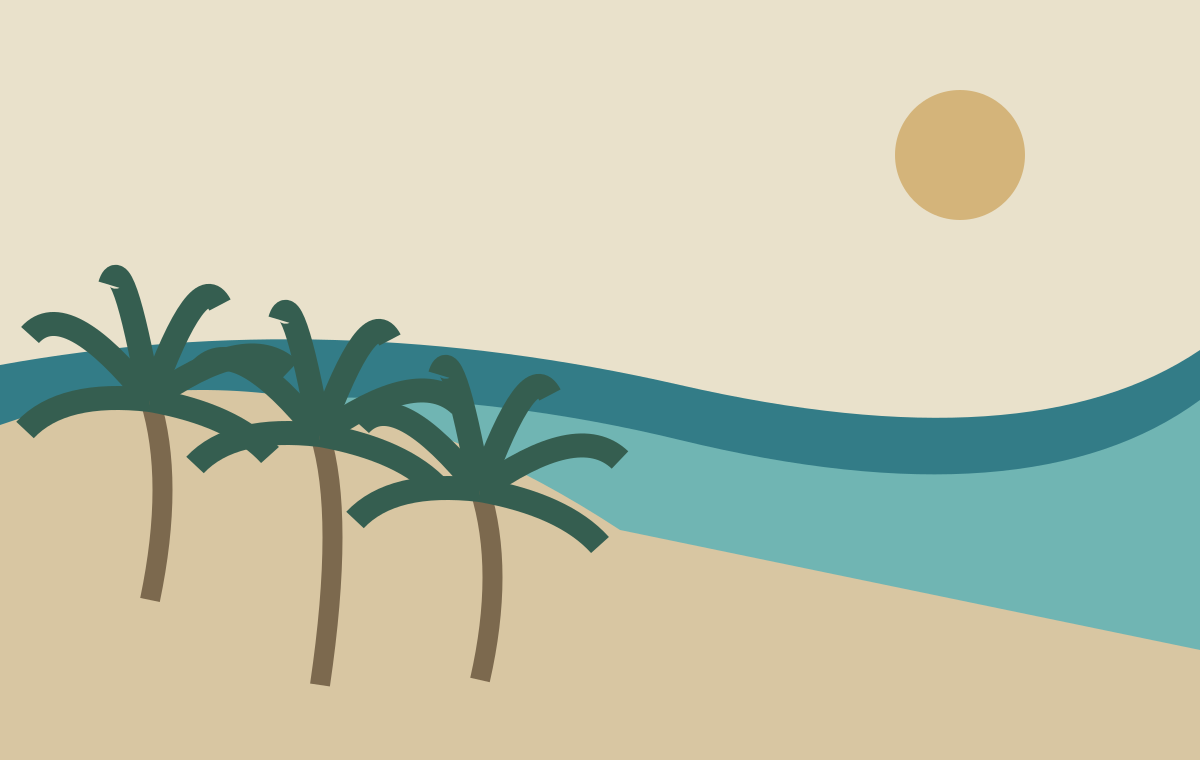
A sandy bay on the edge of a natural palm grove. Discover the beach, the water behind the palm trees and the special landscape of the extreme east of Crete.
Βάι
Own editorial illustration · no photo or accurate map of the beach.
Location
North-East Crete · near Palaikastro
Character
Sandy beach & natural palm grove
Plant species
Phoenix theophrasti
Good to combine
Itanos & Palaikastro
A bay with a green background
Vai is located in the northeast of Crete, in the municipality of Sitia, near Palaikastro. The combination of a sandy beach, clear water and a natural palm grove makes it one of the most recognizable coastal landscapes of the island. From Sitia you travel further on the peninsula, where the sea and the dry hinterland change in proportion.
When you arrive, look at the construction of the place: the bay, the beach and the palm trees behind it. What looks like a holiday photo one green decor, is actually made up of different habitats. A beach visit becomes richer when you try to see the transition from salt water to land.
The forest consists of the indigenous Cretan date palm, Phoenix theophrasti, also written as Phoenix theophrastii. So it is not a landscaped row of ornamental palms along a boulevard. The palm forest and its habitat are protected; the geopark describes both the species and the forest as important components of European nature protection.
A well-known story makes the palms emerge from date stones that sailors would have thrown away. Visit Greece presents this as a legend. It's a nice story to lay next to the landscape, but no botanical explanation for this natural forest.
Your own viewing command: compare young and older palm trees from the authorised paths. Note the shape of the leaves, the shadow and the way plants are in groups. Do not stand between young shoots for a photo and pull out leaves.
Sitia Geopark also describes Vai as a seasonal coastal wetland. Water from the lagoon feeds the low parts of the forest, with pools and swampy pieces. In the dry East Crete, such a water-rich place is of great value for biodiversity and for birds seeking rest during their migration.
The forest is therefore not separate from the beach. The connection between valley, water and coast is at least as important as the separate trees. The geopark here mentions palm trees among others oleanders and mastic shrubs. This gives another entrance to the place: look at transitions and vegetation instead of just looking at the most beautiful view.
How wet a part is visible depends on the season. A dry-looking piece of land can be part of the same habitat. Therefore, follow deposits and paths even if you don't see water or fragile plants yourself.
Visit Greece describes a beach with facilities during the tourist season and parking at the palm grove. Access to the area is mentioned as free. That does not mean that parking, a sunbed or consumptions are also free. Actual rates and availability outside the season are not confirmed for this dossier.
Bring water, sun protection and something for the journey. See on arrival where you can sit without taxing plants or passageways. Shadow on a photo is no guarantee that a allowed, free shade is available at your visitation moment.
For swimming you can judge the sea on the spot: wind, waves and views can change. A clear beach is not automatically shallow everywhere. Follow any flags and clues, keep children close and choose a place where you can easily get out of the water.
Visit Greece calls from Sitia a car ride of about 45 minutes by road towards Vai. Use this as a global planning: starting point, traffic and stops determine the actual journey time. Take the same space for the return journey to drive quietly and do not combine every turn with an extra visit.
An own editorial day proposal: start with Vai when you want to see the beach, keep enough time to stay there and then choose at most one extra destination. If you want to read history, you can put the visit to Itanos at the centre and plan a shorter beach moment.
If you're going by public transport or excursion, check the current return and return trips before your date. This guide doesn't knowingly contain a fixed bus schedule to Vai: an old timetable can give you a wrong expectation in another season.
The nearby Itanos gives the area a historical layer. Visit Greece proposes Vai and Itanos as a combination of nature and culture. This is also a pleasant way to alternate the day: first view the coastal landscape, then think about a city that lived from contacts by sea.
In our existing guides you can read more about Itanos, Palaikastro and the history of East Kreta. Use the atlas to see the location. A short distance on the map does not tell how much time you want to spend in an archaeological site.
A final viewing question for your travel book: what colour, shape or movement belongs to you at Vai? Describe one observation without words as paradise or exotic. This way you capture what you saw, instead of just repeating the familiar description of the beach.
Consulted on 17 October 2026. Tourist services and nature organisations support the geographical and ecological description. Viewing assignments and visitor rhythms are their own editorial proposals. Facilities, rates, transport and access can change per season; follow the current information and directions on the spot.