GASTRONOMY · INGREDIENTS & SAUZEN
Fava: yellow legumes and their creamy mashed potatoes
Fava as raw material and puree: the difference with broad beans, the origin of Santorini and a good bond.
Added: · approx. 2 minutes read
1. One word, two questions
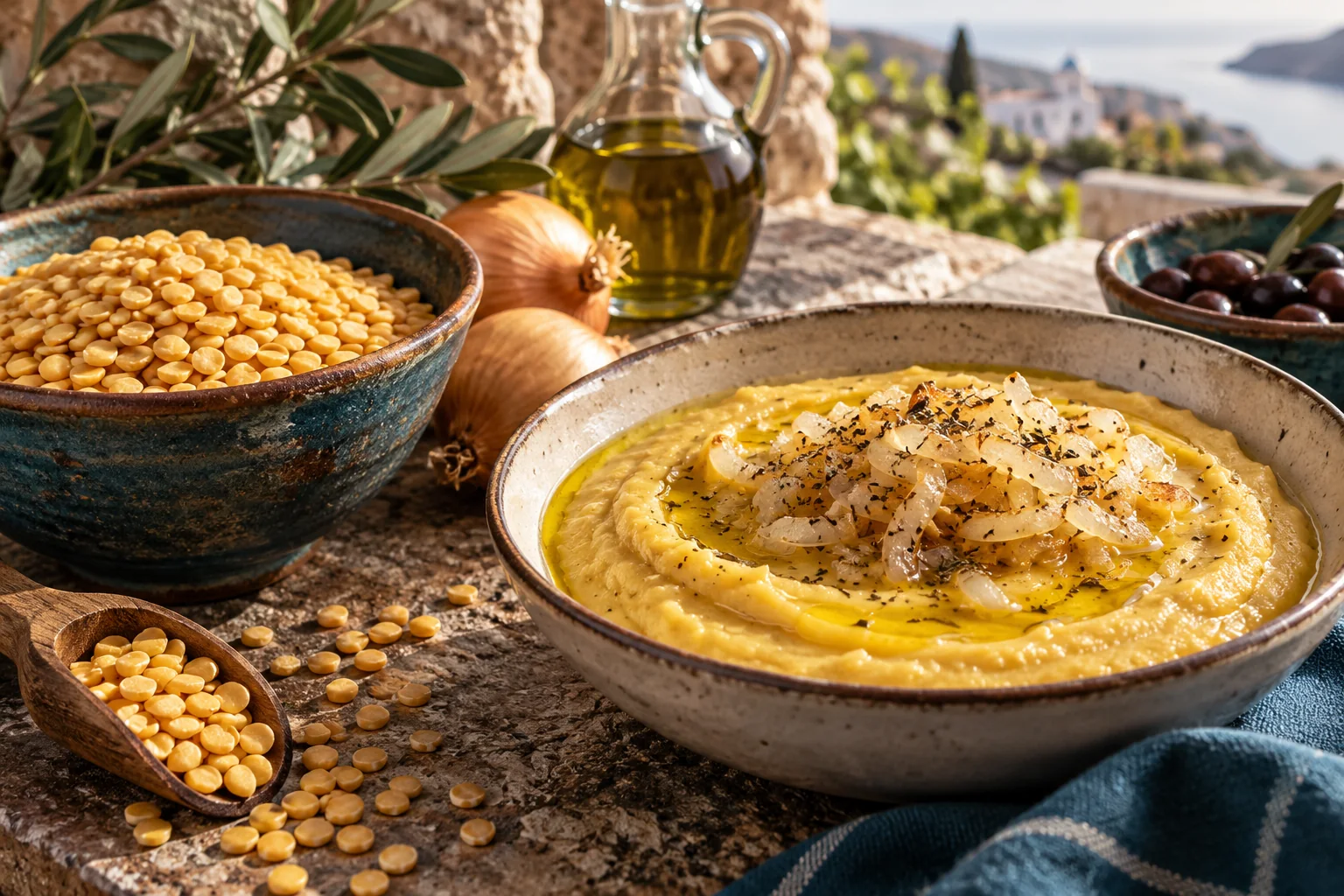
On a Greek map fava often means a soft mashed potatoes of split legumes. That is not automatically a garden bean puree, even though the word in other languages reminds of it. The protected Fava Santorinis has a specific botanical and geographical origin: Lathyrus clymenum. [I08]
A bag of ordinary yellow split peas can produce a tasty mashed potatoes at home, but should therefore not continue for the protected island raw material. On your own menu, make the distinction between yellow split pea pebbles and a product whose Santorinian origin can really be demonstrated.
2. Cooking for a smooth result
Sort and rinse the dry product and follow the cooking advice on the package. Stir when softer to avoid cake. Keep hot water in hand: a puree that drys too early, gaart unevenly.
The desired thickness is also assessed after a rest. A warm mashed potatoes can become firmer when cooling. Therefore, don't quickly add large amounts of oil at the last moment if you actually need some cooking liquid. Water and fat solve various problems.
3. Shrink as a counterweight
Onion, capers, lemon and olive oil can each show a different side of the puree. Don't hand over everything at once in large quantities. Start with oil and some onion; then taste a bite of lemon and another with capers.
A coarse garnish gives contrast, but should not make the soft base untraceable. Serve bread and remember that the salt of that bread also affects the complete snack. A puree that seems loosely restrained, can turn out just right on the table.
4. Product knowledge instead of a mandatory prescription
This chapter is about raw material, binding and recognition. A solid amount of moisture for all fafa bags would give false precision. Store a dry package according to the label and coolly cooked residues quickly back. [I06]
If you want to compare two products, you cook small portions separately and use the same garnish. So you can discover difference in smell and mouth sensation, without a generous layer of onion and oil making everything equal.
Sources and accountability
Consulted on 31 October 2026. Facts about origin and products are linked to these sources. Explanation, comparisons and trial suggestions are written editorially; recipe texts are not reproduced.